 狙如
中山经
《中山经》
狙如
Juru
4.224k中山经
BeastWarOmen
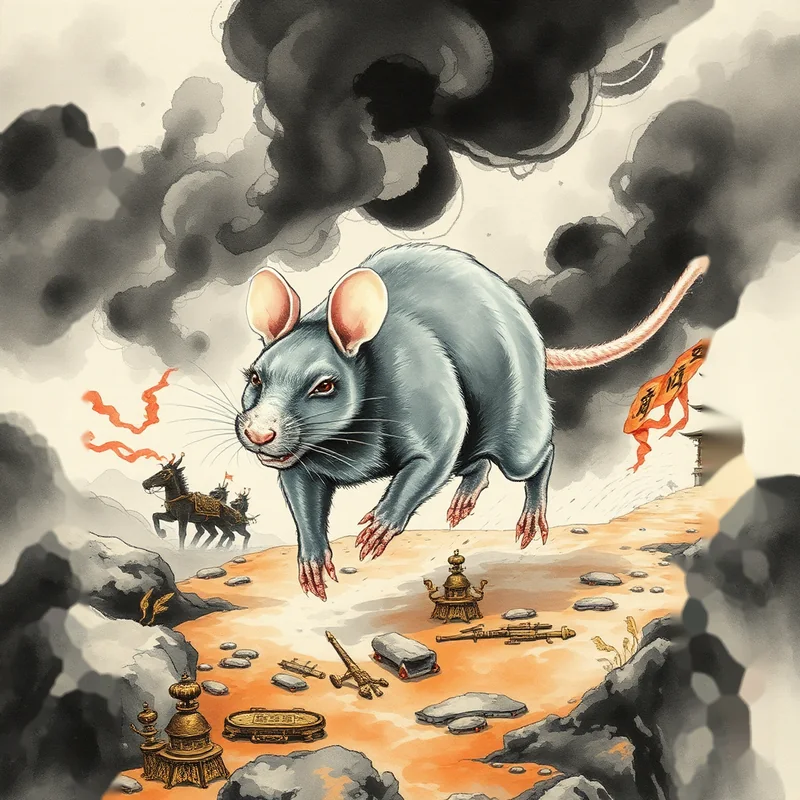
On Mount Yidi lives a beast shaped like a large rat, with white ears and a white muzzle. Its name is Juru, and when it appears the state goes to war.
Original & Translations
中山经曰:又东十五里,曰倚帝之山,其上多玉,其下多金。有兽焉,状如鼣鼠,白耳白喙,名曰狙如,见则其国有大兵。
倚帝山,名字就很硬——"倚帝",靠着天帝。山上出玉,山下出金,是座有来头的山。
狙如住在那里。像鼣鼠——一种大老鼠。白耳朵,白嘴巴。
先说"白耳白喙"这个特征。在自然界,白耳白嘴的鼠类是存在的:某些田鼠、某些家鼠会有白化斑块。这种个体在鼠群里格外显眼,一眼就能认出来。
而鼠类在古人眼里,本来就和"兵"有关。
这不是迷信,是经验。《史记》里记载,军队驻扎的地方,粮草堆积,鼠类必然聚集。所以"鼠多"往往意味着"兵多"。反过来,一只显眼的白鼠从军营方向跑出来,跑到民间,人们就会想:那边在集结。
更直接的一层:鼠疫。战争之后常有瘟疫,瘟疫由鼠传播。所以"鼠"和"兵"在古人的经验里是连着的一串:兵→粮→鼠→疫。
狙如的"白耳白喙",让它成为那一串里最容易被看见的一环。
"见则其国有大兵"——它出现,国家要打仗。
这句话不是它造成的。它只是提前跑了出来。军队集结,粮草转运,人喊马嘶,鼠群先被惊动,四处逃散。一只白耳朵的老鼠跑进村子,老人看见了,就知道:要征兵了。
山海经的"见则"系列,本质上是把动物行为当成仪表盘。水鸟异常→大水,鼠类异常→兵灾,猿猴异常→恐慌。这不是巫术,是最早的物候学——用动物的反应,读人类看不见的变化。
倚帝山出玉出金。金是兵器,玉是礼器。一座出产兵器原料的山,住着一只预告战争的老鼠。
这个安排,很难说是巧合。
The Classic of Central Mountains: fifteen li east is Mount Yidi — "leaning on the High God." Jade above, gold below. A mountain with a pedigree.
Juru lives there. Shaped like a large rat, white ears, white muzzle.
Start with the white ears and muzzle. In nature, white-eared, white-muzzled rodents exist: certain voles, certain house mice carry albinistic patches. Such an individual stands out in a colony. You notice it immediately.
And rodents were already linked to soldiers in the ancient mind.
Not superstition — experience. The Records of the Grand Historian notes that wherever an army camps, grain piles up, and rats gather. So "many rats" tends to mean "many soldiers." In reverse: a conspicuous white rat running out of the direction of a camp, into civilian country, and people conclude that something is massing over there.
A more direct link: plague. War is followed by epidemic, and epidemics travel by rat. In lived experience, rat and soldier belong to one chain: army, grain, rat, disease.
Juru's white ears and muzzle make it the most visible link in that chain.
"When it appears, the state goes to war."
It does not cause the war. It merely runs out ahead of it. Troops assemble, grain moves, men shout, horses whinny — and the rats are disturbed first, scattering. A white-eared rat runs into a village. An old man sees it and knows: conscription is coming.
The "when it appears" omens are, at bottom, a dashboard. Unusual waterbirds mean flood. Unusual rodents mean war. Unusual primates mean panic. Not sorcery — the earliest phenology. Read the animals to see changes humans cannot.
Mount Yidi yields jade and gold. Gold is weaponry; jade is ritual. A mountain producing the raw material of war, inhabited by a rat that announces war.
Hard to call that a coincidence.
เขาอี๋ตี้มีสัตว์รูปร่างเหมือนหนูใหญ่ หูขาว ปากขาว ชื่อจูหรู "เห็นเมื่อไรประเทศนั้นเกิดสงครามใหญ่"
หนูกับทหารเชื่อมกันในประสบการณ์จริง: ค่ายทหารมีเสบียง มีหนูมารวมตัว หลังสงครามมักมีโรคระบาดที่หนูเป็นพาหะ
ตัวนี้แค่ "วิ่งออกมาก่อน" ไม่ได้ทำให้เกิดสงคราม
Gunung Yidi ada binatang macam tikus besar, telinga putih, muncung putih. Namanya Juru. "Muncul, negeri berperang besar."
Tikus dan tentera berkait dalam pengalaman: kem tentera ada bekalan makanan, tikus berkumpul. Selepas perang datang wabak yang dibawa tikus.
Ia cuma "lari keluar dahulu", bukan punca perang.
Núi Ỷ Đế có thú hình chuột lớn, tai trắng, mõm trắng. Tên Thư Như. "Xuất hiện thì nước đại chiến."
Chuột và lính gắn với nhau trong kinh nghiệm: doanh trại có lương, chuột tụ về. Sau chiến tranh là dịch bệnh do chuột truyền.
Nó chỉ "chạy ra trước", không gây ra chiến tranh.
Gunung Yidi ada binatang mirip tikus besar, telinga putih, moncong putih. Namanya Juru. "Muncul, negeri berperang besar."
Tikus dan tentara terkait dalam pengalaman: kem tentara punya perbekalan, tikus berkumpul. Setelah perang datang wabah yang dibawa tikus.
Ia hanya "lari keluar lebih dulu", bukan penyebab perang.
Nearby Creatures