 青耕
中山经
《中山经》
青耕
Qinggeng
4.539k中山经
Divine BirdHealingProtection
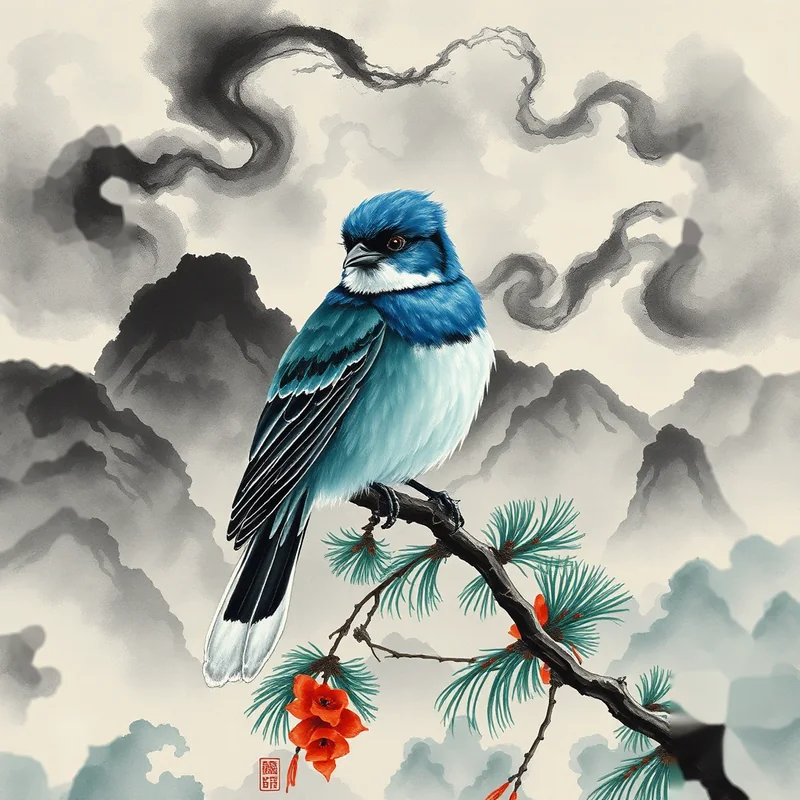
On Mount Jinli lives a bird like a magpie: blue-green body, white beak, white eyes, white tail. Its name is Qinggeng. It wards off plague, and its call is its own name.
Original & Translations
中山经曰:又西北一百里,曰堇理之山,其上多松柏,多美梓,其阴多丹雘,多金,其兽多豹虎。有鸟焉,其状如鹊,青身白喙,白目白尾,名曰青耕,可以御疫,其鸣自叫。
堇理之山,松柏多,好梓木多,山北出丹雘(红色矿物颜料)和铜,兽多豹虎。一座富山,也是一座危险的山。
青耕住在那里。像喜鹊,青色的身子,白嘴,白眼睛,白尾巴。
先说配色。喜鹊是黑白。青耕是青白。青,是蓝绿之间的那种颜色,鸦科鸟类身上最常见的"青",是蓝绿色的金属光泽——蓝喜鹊、灰喜鹊、台湾蓝鹊,翅膀和尾羽在阳光下泛蓝绿。
而"白目"这个描述,非常具体。鸟的眼睛本来就不大,能被看出"白"的,通常是虹膜浅色,或者眼周有一圈白羽。灰喜鹊的眼周是黑的,白喉喜鹊、白翅蓝鹊有浅色虹膜。总之,"白目"是一个从近距离观察才能得到的细节。
"白喙、白尾"也是。喜鹊的尾是黑的,但很多鸦科鸟在展开尾羽时,尾下覆羽是白的,飞起来一片白。
所以青耕的实物原型,很可能是一只灰喜鹊或者蓝鹊。它们在山林里成群,叫声粗哑,一只叫,全群叫。
然后是重点:"可以御疫"。
《山海经》里能"御"什么的动物不少:御火、御兵、御凶、御水。但"御疫"的,屈指可数。
"御疫"有两个意思。一是"吃了它不得病",一是"它在那里,病就不来"。
从上下文看,更像是后者——因为后面紧跟着"其鸣自叫"。
"其鸣自叫"是《山海经》的固定句式,意思是这种鸟的叫声听起来就是它的名字。青耕,青耕,青——耕。
"耕"这个字,是农事。春耕。鸟叫"耕",意味着什么?意味着到了该耕地的时候。
于是整条逻辑就通了:这是一种候鸟。它在某个特定的时节出现,叫着,提醒人下地。而那个时节,恰好也是疫病消退的时节。
为什么?因为冬天过去了。
中国古代的瘟疫有明显的季节性。冬春之交,人口聚集,通风差,呼吸道传染病高发;夏天蚊蝇滋生,肠道传染病高发。而到了春耕时节,天气转暖,人们从密闭的屋子里出来,散到田里去——人口密度骤降,呼吸道传染的链条就断了。
同时,冬天积累的垃圾、粪便被清理,蚊蝇的越冬场所被翻耕破坏。
所以"青耕来了,疫病走了",是一句观察准确的农谚,被写成了神话。
它不需要法力。它只需要准时。
一座有豹虎的山,一只准时出现的鸟,一句被记了两千多年的农事提醒。青耕的工作,是报时。
The Classic of Central Mountains: one hundred li northwest is Mount Jinli. Pines and cypresses above; fine catalpa in abundance; on its shady side red ochre and copper; among its animals, many leopards and tigers. A rich mountain. Also a dangerous one.
Qinggeng lives there. Like a magpie: blue-green body, white beak, white eyes, white tail.
Start with the colours. A magpie is black and white. Qinggeng is blue-green and white. Qing is the colour between blue and green, and in the crow family the commonest qing is iridescent blue-green — the metallic sheen on the wings and tail of blue magpies, azure-winged magpies, Taiwan blue magpies, flashing in sunlight.
And "white eyes" is a very specific observation. Birds' eyes are small; for one to read as white, the iris must be pale, or a ring of white feathers must surround it. Azure-winged magpies have black around the eye; white-throated magpies and white-winged blue magpies have pale irises. Either way, "white eyes" is a detail you only get by looking closely.
"White beak, white tail" likewise. A magpie's tail is black, but in many corvids the undertail coverts are white, so a bird in flight shows a sheet of white.
So the model animal is probably an azure-winged magpie or a blue magpie. They move through mountain forest in flocks, and their calls are harsh; one starts and the whole flock answers.
Then the point of the entry: it wards off plague.
Plenty of Shanhaijing animals ward off something — fire, weapons, misfortune, flood. Warding off plague is rare. You can count them.
"Wards off plague" can mean two things: eat it and you will not fall ill; or, it is present and the sickness does not come.
From the context, the second fits better, because of what follows: its call is its own name.
That is a fixed formula in the book, and it means the bird's cry sounds like the word. Qing-geng. Qing — geng.
Geng is a farming word. Spring ploughing. A bird that calls "plough" means: it is time to plough.
Now the logic closes. This is a migratory bird. It appears at a particular point in the year, calling, telling people to get into the fields. And that same point in the year is when epidemics recede.
Why? Because winter is over.
Epidemics in ancient China were strongly seasonal. At the turn of winter into spring, people crowded indoors with poor ventilation, and respiratory infections peaked. In summer, flies and mosquitoes bred and intestinal disease peaked. Then ploughing season arrived: the weather warmed, people left the sealed houses and scattered across the fields — density collapsed, and the chain of respiratory transmission broke.
At the same time, the accumulated refuse and manure of winter was cleared, and the overwintering grounds of flies were turned over by the plough.
So "Qinggeng has come, the sickness has gone" is an accurate agricultural observation, written down as myth.
It needs no magic. It only needs to be on time.
A mountain with leopards and tigers, a bird that arrives punctually, a farming reminder recorded for two thousand years. Qinggeng's job is to tell the time.
เขาจิ่นหลี่ (มีต้นสนและต้นหยางมาก ด้านเหนือมีสีแดงและทองแดง สัตว์มีเสือดาวและเสือ)
นกชิงเกิงคล้ายนกกางเขน ตัวเขียว ปากขาว ตาขาว หางขาว "กันโรคระบาดได้ ร้องเป็นชื่อตัวเอง"
"ชิง" คือสีเขียวอมน้ำเงินแบบขนนกตระกูลอีกา "ตาขาว" คือรายละเอียดที่ต้องดูใกล้ ๆ — น่าจะเป็นนกสกุล blue magpie
"เกิง" แปลว่าไถนา นกมาร้องตอนต้องไถนา ซึ่งเป็นช่วงที่โรคทางเดินหายใจลดลงเพราะคนออกจากบ้านไปทุ่งนา
ไม่ต้องมีเวทมนตร์ แค่มาตรงเวลา
Gunung Jinli (banyak pain dan catalpa; sebelah utara ada oker merah dan tembaga; binatangnya banyak harimau dan harimau bintang).
Burung Qinggeng seperti murai: badan hijau biru, paruh putih, mata putih, ekor putih. "Menangkal wabak; bunyinya namanya sendiri."
"Qing" ialah hijau kebiruan seperti kilau bulu keluarga gagak. "Mata putih" detail yang hanya nampak dari dekat — mungkin magpie biru.
"Geng" bermaksud membajak. Burung berbunyi tepat ketika orang perlu membajak — musim yang sama apabila penyakit pernafasan menurun kerana orang keluar ke sawah.
Tiada sihir. Cuma tepat pada masanya.
Núi Cẩn Lý (nhiều tùng bách, catalpa; phía bắc có đỏ son và đồng; thú nhiều báo và hổ).
Chim Thanh Canh giống ác là: mình xanh, mỏ trắng, mắt trắng, đuôi trắng. "Chống được dịch bệnh; kêu là tên mình."
"Thanh" là xanh lam lục như ánh lông họ quạ. "Mắt trắng" là chi tiết chỉ thấy khi nhìn gần — có lẽ là blue magpie.
"Canh" nghĩa là cày. Chim kêu đúng lúc cần cày — cũng là lúc bệnh hô hấp giảm vì người ra đồng.
Không cần phép thuật. Chỉ cần đúng giờ.
Gunung Jinli (banyak pinus dan catalpa; sisi utara ada oker merah dan tembaga; binatangnya banyak macan dan macan tutul).
Burung Qinggeng mirip murai: tubuh hijau biru, paruh putih, mata putih, ekor putih. "Menangkal wabah; bunyinya namanya sendiri."
"Qing" adalah hijau kebiruan seperti kilau bulu keluarga gagak. "Mata putih" detail yang hanya terlihat dari dekat — mungkin magpie biru.
"Geng" berarti membajak. Burung berbunyi tepat saat orang perlu membajak — musim yang sama ketika penyakit pernapasan menurun karena orang keluar ke sawah.
Tanpa sihir. Hanya tepat waktu.
Nearby Creatures