 䍺
南山经
《南山经》
䍺
Huanyang
4.533k南山经
BeastImmortalityCuriosity
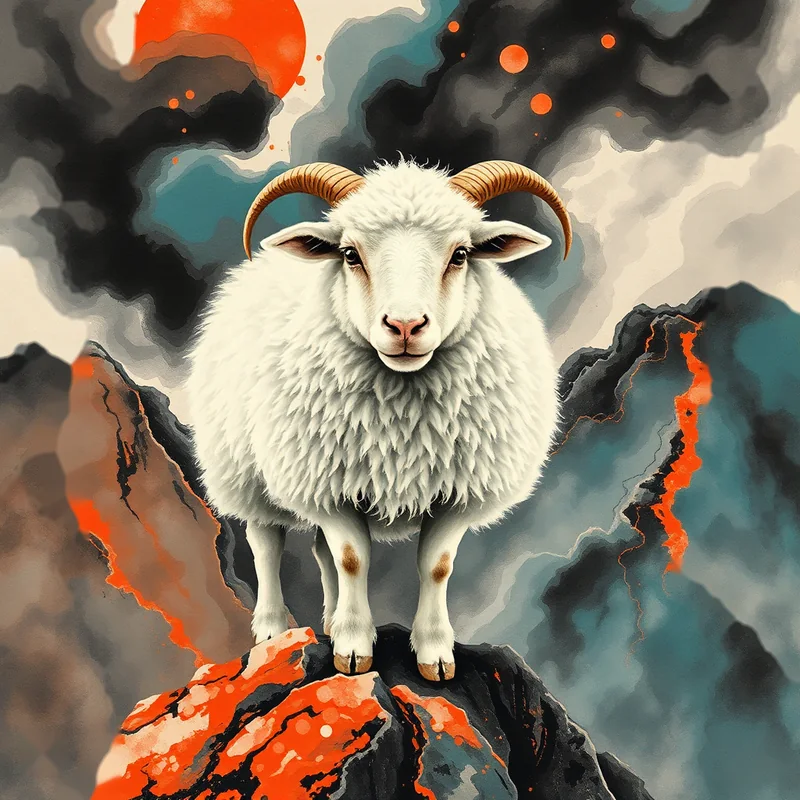
Mount Xun gives copper on its sunny side and jade on its shady side. A beast lives there shaped like a sheep with no mouth. It cannot be killed. Its name is Huanyang.
Original & Translations
南山经曰:又东四百里,曰洵山,其阳多金,其阴多玉。有兽焉,其状如羊而无口,不可杀也,其名曰䍺。
洵山,南面出金,北面出玉。一座矿山的南北两面,各出一种矿。
山上有一种兽,形状像羊,没有嘴。不可杀。
"无口"三个字,是《山海经》里最彻底的一次减法。
《山海经》里"不完整"的身体很多:帝江浑敦无面目,比翼鸟只有一只眼睛一只翅膀,一臂国只有一条手臂,贯匈国胸口有个洞。这些是少了一部分。
䍺不一样。它少的不是手、不是眼,是口。
口是什么?口是身体和世界的接口。吃东西从口进,说话从口出,呼吸也从口进出。没有口,意味着这个身体不参与交换。
而不参与交换,在先秦的思维里,就等于不死。
这不是逻辑游戏,是一条非常古老的推理链:凡有口者,必食;凡食者,必有所待;有所待者,必有所尽;有所尽者,必死。无口,则无所待;无所待,则不尽;不尽,则不可杀。
换句话说,䍺不是杀不死,是没有可以被杀的那个接口。刀砍进去,砍的是一个不与外界交换的封闭体。
这条推理链,后来长成了两件事。
一件是辟谷。道教认为,人吃五谷,五谷在肠中腐坏,产生三尸,三尸上告天帝,人的寿命就到了。所以要绝谷,要食气。这是把无口的想象,搬到自己身上。
另一件是尸解。修行者死后,尸体留下,魂魄走了,叫作尸解。留下的那具身体,就是不食、不动、不腐的——一具无口的身体。
所以䍺是一个原型:不死的第一步,是先不吃。
但生物学要在这里插一句话。
没有口,确实可以不参与交换。但代价是:不进食的动物,寿命极短。
蚕蛾。家蚕羽化成蛾以后,口器退化,不能取食。它的一生只剩两三天,全部用来交配、产卵,然后死。蜉蝣更彻底,成虫的口器完全退化,有的种类只活几个小时。
它们做到了无口。
它们没有做到不死。
所以"不可杀"这三个字,如果按字面读,是一句谎话;但如果按另一种方式读,它是一句精确的话:这种动物不需要你去杀。它自己会死,而且死得很快。
古人看见的,可能正是那几天。一只蛾,不吃,不动,趴在墙上,第二天还在,第三天不见了。没有血迹,没有尸体,没有腐烂的过程。
不可杀也。
它没有被杀,它只是消失了。
这就是不死最朴素的样子:不是永远活着,是死得看不见。
洵山今天在哪里,说法不一。有说在浙江西部,有说在江西。山南出金,山北出玉——金是铜,玉是透闪石,这两种矿在浙赣交界的火山岩带里确实共生。
一座有铜有玉的山,一只没有口的羊。
矿是实的,羊是想的。但那个想法,比矿活得久。
The Classic of Southern Mountains: four hundred li east is Mount Xun, copper on its sunny side, jade on its shady side. A beast lives there shaped like a sheep, with no mouth. It cannot be killed. Its name is Huanyang.
Mount Xun gives metal on the south face and jade on the north. One mountain, two minerals, one on each side.
On it lives a beast shaped like a sheep. No mouth. Cannot be killed.
"No mouth" is the most radical subtraction in the whole Shanhaijing.
The book is full of incomplete bodies. Hundun has no face at all. The paired-wing bird has one eye and one wing. The one-armed country has one arm. The chest-pierced country has a hole through its chest. Those are bodies missing a part.
Huanyang is different. What it lacks is not a hand or an eye. It is the mouth.
What is a mouth? The mouth is the interface between a body and the world. Food goes in through it, speech comes out, breath goes both ways. No mouth means a body that does not exchange.
And in early Chinese thought, not exchanging equals not dying.
This is not a word game. It is a very old chain of reasoning: whatever has a mouth must eat; whatever eats depends on something; whatever depends on something runs out; whatever runs out dies. No mouth, no dependence; no dependence, no exhaustion; no exhaustion — it cannot be killed.
In other words, Huanyang is not unkillable. It has no interface at which killing could occur. A blade goes in and strikes a closed body that trades nothing with the outside.
That chain of reasoning later grew into two practices.
One is grain avoidance. Daoists held that eating grain leaves rot in the intestines, which breeds the three corpse-worms; the worms report to heaven, and your allotted span ends. So you stop eating grain and feed on breath instead. That is the mouthless imagination applied to oneself.
The other is corpse-release. When a practitioner dies, the body stays and the spirit leaves. What remains is a body that does not eat, does not move, does not rot — a mouthless body.
So Huanyang is a prototype: the first step toward not dying is not eating.
But biology wants a word here.
No mouth does mean no exchange. The price is that an animal which does not feed lives very briefly.
The silkmoth. After the silkworm pupates and emerges, its mouthparts are vestigial. It cannot feed. Its adult life is two or three days, spent entirely on mating and laying eggs, and then it dies. Mayflies go further: the adult mouthparts are wholly degenerate, and some species live only hours.
They achieved no mouth.
They did not achieve not dying.
So "cannot be killed," read literally, is a lie. Read another way, it is exact: this animal does not need killing. It dies on its own, and quickly.
What the ancients saw may have been exactly those few days. A moth, not eating, not moving, on the wall. Still there the next day. Gone the day after. No blood, no corpse, no process of decay.
It cannot be killed.
It was not killed. It simply disappeared.
That is the plainest form of immortality: not living forever, but dying out of sight.
Where Mount Xun is today is disputed — western Zhejiang, some say; Jiangxi, say others. Copper on the south face and jade on the north is plausible: copper and tremolite jade do occur together in the volcanic belt along the Zhejiang-Jiangxi border.
A mountain with copper and jade. A sheep with no mouth.
The minerals are real. The sheep is a thought. But the thought has outlived the mines.
เขาซุน มีทองแดงด้านใต้ มีหยกด้านเหนือ
มีสัตว์ "รูปร่างเหมือนแกะ แต่ไม่มีปาก ฆ่าไม่ได้ ชื่อหวนหยาง"
"ไม่มีปาก" คือการตัดทอนที่รุนแรงที่สุดในซานไห่จิง
ปากคือจุดเชื่อมระหว่างร่างกายกับโลก กินเข้า พูดออก หายใจเข้าออก ถ้าไม่มีปาก ร่างกายก็ไม่แลกเปลี่ยนกับโลก
และในความคิดจีนโบราณ "ไม่แลกเปลี่ยน" = "ไม่ตาย"
สายเหตุผลคือ: มีปากต้องกิน กินต้องพึ่งสิ่งอื่น พึ่งสิ่งอื่นต้องมีวันหมด หมดแล้วก็ตาย ไม่มีปาก = ไม่ต้องพึ่ง = ไม่มีวันหมด = ฆ่าไม่ได้
ความคิดนี้ต่อมากลายเป็นสองสิ่ง: การอดอาหารเพื่อบำเพ็ญ (ไม่กินข้าว กินลม) และความเชื่อเรื่อง "ปล่อยศพ" ที่ร่างกายไม่เน่า
แต่ทางชีววิทยา: สัตว์ที่ไม่มีปากกินไม่ได้จริง และอายุสั้นมาก ผีเสื้อไหมโตเต็มวัยมีปากฝ่อ กินไม่ได้ อยู่ได้สองสามวัน ใช้เวลาทั้งหมดไปกับการสืบพันธุ์แล้วตาย
มันทำได้ "ไม่มีปาก" แต่ทำไม่ได้ "ไม่ตาย"
"ฆ่าไม่ได้" จึงอาจหมายถึง: ไม่ต้องฆ่า มันตายเอง และตายเร็ว
สิ่งที่คนโบราณเห็นอาจเป็นเพียงไม่กี่วันนั้น — ไม่กิน ไม่ขยับ เกาะอยู่บนผนัง วันรุ่งขึ้นยังอยู่ วันถัดไปหายไป ไม่มีเลือด ไม่มีศพ ไม่เน่า
นั่นคือรูปธรรมที่ง่ายที่สุดของ "ไม่ตาย": ไม่ใช่มีชีวิตตลอดไป แต่ตายโดยมองไม่เห็น
Gunung Xun: tembaga di selatan, jed di utara.
Ada binatang "seperti kambing biri-biri tetapi tiada mulut, tidak boleh dibunuh, namanya Huanyang."
"Tiada mulut" ialah pengurangan paling radikal dalam kitab Shanhaijing.
Mulut ialah antara muka antara tubuh dan dunia: makanan masuk, kata keluar, nafas dua hala. Tanpa mulut, tubuh tidak bertukar dengan dunia.
Dalam pemikiran Cina kuno, "tidak bertukar" bermakna "tidak mati".
Rantaiannya: ada mulut mesti makan; makan bergantung pada sesuatu; bergantung bermakna ada had; had bermakna mati. Tiada mulut, tiada pergantungan, tiada had — maka tidak boleh dibunuh.
Idea ini kemudian menjadi dua amalan: menahan diri daripada makan bijirin (makan angin) dan kepercayaan "lepas jasad" yang tubuhnya tidak reput.
Tetapi biologi berkata: haiwan tanpa mulut memang tidak makan, dan hidupnya sangat singkat. Rama-rama sutera dewasa tidak boleh makan; hidupnya dua tiga hari sahaja, semuanya untuk membiak.
Ia berjaya "tiada mulut", tetapi tidak berjaya "tidak mati".
Mungkin "tidak boleh dibunuh" bermaksud: tidak perlu dibunuh. Ia mati sendiri, dan cepat.
Yang dilihat orang dahulu mungkin hanya beberapa hari itu: tidak makan, tidak bergerak, lekat pada dinding, esok masih ada, lusa hilang — tanpa darah, tanpa mayat, tanpa reput.
Itulah bentuk paling sederhana "tidak mati": bukan hidup selamanya, tetapi mati tanpa kelihatan.
Núi Tuân: phía nam có đồng, phía bắc có ngọc.
Có thú "như cừu nhưng không có miệng, không thể giết, tên Hoàn Dương."
"Không miệng" là phép trừ triệt để nhất trong Sơn Hải Kinh.
Miệng là chỗ nối giữa thân thể và thế giới: ăn vào, nói ra, thở ra vào. Không miệng nghĩa là thân thể không trao đổi với bên ngoài.
Trong tư tưởng Hán cổ, "không trao đổi" bằng "không chết".
Chuỗi lý lẽ: có miệng ắt phải ăn; ăn ắt phải nhờ; nhờ ắt có hạn; có hạn ắt chết. Không miệng, không nhờ, không hạn — nên không thể giết.
Ý niệm này về sau thành hai thứ: tuyệt cốc (không ăn ngũ cốc, ăn khí) và "giải thi" — xác không phân hủy.
Nhưng sinh học nói: không miệng thì đúng là không ăn, và tuổi thọ rất ngắn. Bướm tằm trưởng thành có miệng thoái hóa, không ăn được, sống hai ba ngày, dành hết cho sinh sản rồi chết.
Nó đạt "không miệng", không đạt "không chết".
"Không thể giết" có lẽ nghĩa là: không cần giết. Nó tự chết, và chết rất nhanh.
Người xưa có lẽ chỉ thấy mấy ngày đó: không ăn, không động, bám trên tường, hôm sau vẫn còn, hôm nữa biến mất — không máu, không xác, không thối rữa.
Đó là dạng đơn giản nhất của "bất tử": không phải sống mãi, mà chết mà không ai thấy.
Gunung Xun: tembaga di selatan, batu giok di utara.
Ada binatang "seperti domba tetapi tanpa mulut, tidak bisa dibunuh, namanya Huanyang."
"Tanpa mulut" adalah pengurangan paling radikal dalam kitab Shanhaijing.
Mulut adalah antarmuka antara tubuh dan dunia: makanan masuk, kata keluar, napas dua arah. Tanpa mulut, tubuh tidak bertukar dengan dunia.
Dalam pemikiran Cina kuno, "tidak bertukar" berarti "tidak mati".
Rantainya: punya mulut mesti makan; makan bergantung pada sesuatu; bergantung berarti ada batas; batas berarti mati. Tanpa mulut, tanpa ketergantungan, tanpa batas — maka tidak bisa dibunuh.
Gagasan ini kemudian menjadi dua praktik: menahan makan biji-bijian (makan angin) dan kepercayaan "lepas jasad" yang tubuhnya tidak membusuk.
Tetapi biologi berkata: hewan tanpa mulut memang tidak makan, dan hidupnya sangat singkat. Ngengat sutra dewasa tidak bisa makan; hidupnya dua tiga hari saja, semuanya untuk berkembang biak.
Ia berhasil "tanpa mulut", tetapi tidak berhasil "tidak mati".
Mungkin "tidak bisa dibunuh" berarti: tidak perlu dibunuh. Ia mati sendiri, dan cepat.
Yang dilihat orang dahulu mungkin hanya beberapa hari itu: tidak makan, tidak bergerak, menempel di dinding, besok masih ada, lusa hilang — tanpa darah, tanpa mayat, tanpa pembusukan.
Itulah bentuk paling sederhana "tidak mati": bukan hidup selamanya, tetapi mati tanpa terlihat.
Nearby Creatures