 犀渠
中山经
《中山经》
犀渠
Xiqu
4.331k中山经
BeastMan-eaterOx
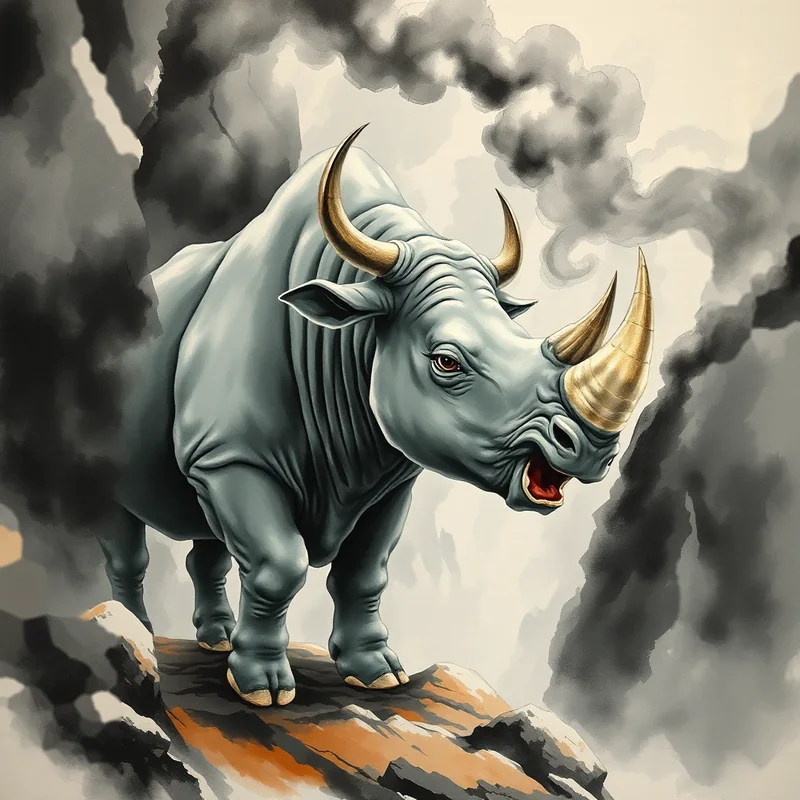
On Mount Li lives a beast like an ox with a grey-green hide. Its cry sounds like a baby, and it eats people. Its name is Xiqu.
Original & Translations
中山经曰:又西一百二十里,曰厘山,其阳多玉,其阴多蒐。有兽焉,其状如牛,苍身,其音如婴儿,是食人,其名曰犀渠。
厘山,在今天的豫西山地一带。阳面出玉,阴面多"蒐"——蒐是一种茜草,能染红色。一座山,一面产玉,一面产红色染料。
犀渠住在那里。形状像牛,身子是"苍"色。
"苍"这个字很关键。它不是黑,也不是绿,是青灰——像生锈的青铜,像雨前的天,像犀牛皮。今天看印度犀、爪哇犀,皮就是这种深灰带青的调子,褶皱处发黑,光线斜打上去泛一点冷绿。
所以"苍身"两个字,是极准的写生。
然后是"其音如婴儿"。犀牛会叫,而且叫得不小。求偶时的喷鼻、威胁时的低吼、幼崽找母兽时的短促尖叫——最后这一种,隔着山谷听,确实像小孩哭。古人没有录音机,他们只能拿最熟的声音去打比方。婴啼,是所有比方里最不会错的那个。
"是食人"——犀牛吃人吗?不吃。但犀牛会撞人。
一头成年印度犀体重两吨,冲刺时速四十公里,头上有角,皮下是几乎不含脂肪的硬皮。它视力极差,靠嗅觉和听觉,一旦受惊就直线冲撞,撞完不回头。在这种动物面前,"被吃"和"被踩死"对目击者来说没有区别——都是人没了,剩一堆痕迹。
《山海经》写"食人",往往不是记录进食行为,是记录死亡事件。
还有一层:中原曾经真的有犀牛。
殷墟出土过犀牛骨,商代青铜器里有"小臣艅犀尊",造型写实到能看出是苏门答腊犀。甲骨文里有"获犀"的卜辞。也就是说,三千年前的河南,气候比现在暖湿,沼泽遍布,犀牛是本地动物。
到了《山海经》成书的年代,犀牛在中原已经退到边缘。气候变冷,沼泽被开垦,人口上来,犀牛的栖息地一块块消失。它从"常见的大型兽"变成"山里偶尔出现的怪物"。
犀渠就是那个转身的背影。
一座出玉、出红染料的山,住着一只青灰色的、会像婴儿一样叫的、会撞死人的巨兽。它不是神话凭空造出来的。它是真的,只是正在消失。
The Classic of Central Mountains: one hundred and twenty li west is Mount Li. Jade on its sunny side; on its shady side, madder — the plant that yields red dye. A mountain with jade on one face and pigment on the other.
Xiqu lives there. Shaped like an ox, with a cang hide.
That word matters. Cang is not black and not green: it is the blue-grey of oxidized bronze, of sky before rain, of rhinoceros skin. Look at an Indian or Javan rhino today and the hide is exactly that — deep grey with a green cast, black in the folds, faintly cold where the light rakes across it.
"Cang body" is not a poetic flourish. It is accurate field notation.
Then: its cry is like a baby's. Rhinos vocalize, and not quietly. The snort of courtship, the low bellow of threat, the short sharp squeal of a calf looking for its mother — that last one, heard across a valley, genuinely sounds like a child crying. The ancients had no recorder. They reached for the most familiar comparison available, and an infant's cry is the comparison least likely to be wrong.
"And it eats people." Rhinos do not eat people. Rhinos hit people.
An adult Indian rhino weighs two tonnes, charges at forty kilometres an hour, carries a horn, and wears hide with almost no fat under it. Its eyesight is terrible; it navigates by smell and hearing; when startled it runs in a straight line and does not turn around. To a witness, "eaten" and "trampled into the mud" are not different outcomes. A person was there; then there was a mess and no person.
When the Shanhaijing writes "eats people," it is usually not describing feeding behaviour. It is recording a death.
And there is another layer: the Central Plain really did have rhinos.
Rhinoceros bones have come out of the Yinxu excavations. Shang bronzes include a rhino zun — a ritual wine vessel — modelled closely enough to identify the species as the Sumatran rhino. Oracle bones carry divinations about capturing rhinos. Three thousand years ago Henan was warmer and wetter than now, thick with marsh, and rhinos were local animals.
By the time the Shanhaijing was compiled, they had been pushed to the margins. The climate cooled, the marshes were drained, the population grew, and the habitat went away in pieces. The rhino stopped being a common large animal and became a monster occasionally met in the hills.
Xiqu is the silhouette of that retreat.
A mountain yielding jade and red dye, inhabited by a blue-grey beast that cries like an infant and can kill a man by running at him. It was not invented. It was real, and it was leaving.
เขาหลีมีสัตว์ชื่อซีฉวี รูปร่างเหมือนวัว ตัวสีเขียวอมเทา ("ชาง" คือสีเดียวกับหนังแรด) เสียงร้องเหมือนทารก กินคน
จริง ๆ แล้วแรดไม่กินคน แต่มันพุ่งชน คนที่ถูกชนก็ตายเหมือนกัน
สำคัญคือ กลางจีนเคยมีแรดจริง ขุดพบกระดูกแรดที่อินซวี มี bronzes รูปแรดยุคราชวงศ์ซาง ต่อมาอากาศเย็นลง บึงถูกถม แรดก็ถอยหายไป เหลือแค่ความจำ
Gunung Li ada binatang bernama Xiqu. Bentuk macam lembu, badan kelabu kehijauan — warna kulit badak. Bunyinya macam bayi. Makan orang.
Sebenarnya badak tidak makan orang, tapi ia langgar. Orang kena langgar pun mati juga.
Yang penting: dataran tengah China memang pernah ada badak. Tulang badak dijumpai di Yinxu, ada bekas gangsa bentuk badak zaman Shang. Kemudian iklim sejuk, paya dikeringkan, badak berundur. Tinggal cerita.
Núi Ly có thú tên Tê Cừ. Hình bò, mình xanh xám — đúng màu da tê giác. Kêu như trẻ con. Ăn thịt người.
Thật ra tê giác không ăn thịt người, nhưng nó húc. Bị húc cũng chết.
Điều đáng nói: Trung Nguyên xưa có tê giác thật. Xương tê giác khai quật ở Ân Khư, có tượng tê giác bằng đồng đời Thương. Về sau khí hậu lạnh đi, đầm lầy bị lấp, tê giác rút lui. Chỉ còn truyền thuyết.
Gunung Li ada binatang bernama Xiqu. Bentuk lembu, tubuh kelabu kehijauan — warna kulit badak. Bunyinya seperti bayi. Makan orang.
Sebenarnya badak tidak makan orang, tapi menyeruduk. Kena seruduk juga mati.
Yang penting: dataran tengah Tiongkok memang pernah punya badak. Tulang badak ditemukan di Yinxu, ada perunggu bentuk badak zaman Shang. Lalu iklim mendingin, rawa dikeringkan, badak mundur. Tinggal cerita.
Nearby Creatures