 马腹
中山经
《中山经》
马腹
Mafu
4.436k中山经
BeastMan-eaterDeception
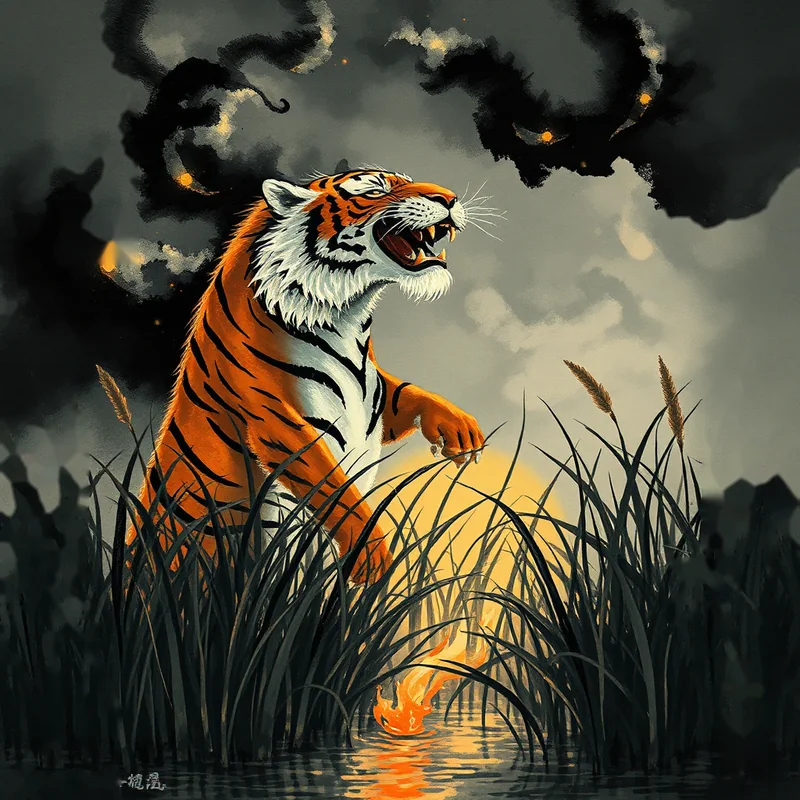
On Mount Manqu lives a beast called Mafu: a tiger body with a human face. Its cry is like a baby, and it eats people.
Original & Translations
中山经曰:又西一百五十里,曰蔓渠之山,其上多金玉,其下多竹箭。伊水出焉,而东流注于洛。有兽焉,其名曰马腹,其状如人面虎身,其音如婴儿,是食人。
蔓渠之山,伊水的源头之一。山上金玉,山下竹箭——竹箭是做箭杆的竹子。一座产兵器材料的山。
马腹住在这里。人面,虎身。
先说"人面虎身"这个组合。它听起来像拼贴,其实是最容易发生的误认之一。
老虎的脸是圆的。额头上有几道深纹,正中间那道往往像个"王"字——这是中国人从小听熟的说法。颊边两撮白毛,眼睛上方有一块浅色。夜里,火光从下往上打,虎从草丛里抬起头来,圆的、有纹的、有浅色块的、两只眼睛在同一平面上——这张脸会被人的脑子直接归到"人脸"那一栏。
人的大脑对"脸"有专门的识别区,而且阈值很低。看见两个点、一条横线,就会认出脸。所以一只虎的脸在特定光线下被认成人脸,不是古人在编故事,是人的视觉系统在正常工作——只是工作得过头了。
然后是"其音如婴儿"。前面犀渠那里说过一次,这里又来。虎的幼崽叫声确实像婴儿。而母虎外出捕猎时,幼虎会叫。
于是整个画面就成立了:夜里,山谷,一声婴儿哭。你循声过去,看见一张人脸从草里抬起来。
接下来是"食人"。
伊水上游,今天的河南卢氏、栾川一带,山高林密,自古虎患。明清方志里,豫西山区的虎伤人记录能排出长长的名单。当地对付虎的办法,除了打,还有"以虎皮镇"—把虎皮挂在村口,让别的虎看见同类被剥皮,绕道走。这种想法在今天看来没什么道理,但它说明了一件事:虎患是真的,而且长期存在。
马腹的"马腹"两个字,一直没有定解。有人说"马腹"是形容它腹部鼓胀如马;有人说这是某个已消失部族的语词音译;也有人说,"马腹"是"码伏"——伏在路码子(山道口)上的东西。
我更愿意信第三种。因为虎就是这样捕猎的:伏在路边,等人来。
一座产箭竹的山,一只伏在路边的虎,一个把虎脸认成人脸的夜行人。三个元素凑在一起,就是马腹。
它不需要是神。它只需要在正确的光线下,出现在正确的地方。
The Classic of Central Mountains: one hundred and fifty li west is Mount Manqu. Gold and jade above; arrow bamboo below — the bamboo that becomes arrow shafts. A mountain producing the raw material of weapons.
Mafu lives there. Human face, tiger body.
Take the combination first. It sounds like collage. It is actually one of the easiest misreadings in the world.
A tiger's face is round. Deep stripes cross the forehead, and the central one often reads as the character wang, "king" — a thing every Chinese child is told. White tufts at the cheeks. Pale patches above the eyes. At night, with firelight thrown upward from below, a tiger lifting its head out of tall grass presents: a round shape, marked, with pale blocks, two eyes on one plane. The human brain files that under "human face" without asking.
The brain has dedicated machinery for faces, and the threshold is low. Two dots and a line and you have a face. A tiger's face caught in the right light is not a story the ancients made up. It is the visual system doing its job — too well.
Then: its cry is like a baby's. The same note as Xiqu. Tiger cubs do sound like infants, and cubs call when the mother is out hunting.
So the whole scene assembles itself. Night, a valley, the sound of a baby crying. You follow it. A human face rises out of the grass.
Then: it eats people.
The upper Yi River — modern Lushi and Luanchuan in Henan — is high, forested, and has a long documented history of tiger attacks. Ming and Qing gazetteers from the western Henan hills list them at length. Besides hunting, the local countermeasure was to display tiger skins: hang a flayed hide at the village gate so that other tigers see what happened to one of their own and go around. The logic does not hold up today. What it proves is that the danger was real and chronic.
The name Mafu has never been settled. Some read it as "belly like a horse's," from the animal's distended flank. Some hear a lost tribal word. Some parse it as ma-fu, "crouching at the road marker" — the thing that lies in wait where the path narrows.
I prefer the third. Because that is exactly how a tiger hunts: it lies beside the road, and it waits for you to come.
A mountain of arrow bamboo, a tiger beside the path, a traveller at night who mistakes a tiger's face for a man's. Put those three together and you have Mafu.
It does not need to be a god. It only needs the right light, in the right place.
เขาหมานฉวี ต้นน้ำอี๋สุย มีสัตว์ชื่อหม่าฟู่ หน้าเป็นคน ตัวเป็นเสือ เสียงร้องเหมือนทารก กินคน
หน้าเสือนั้นกลม มีลายบนหน้าผาก มีขนขาวที่แก้ม ในแสงไฟตอนกลางคืน สมองคนจะจัดมันเข้า "หมวดหน้าคน" ทันที
ลูกเสือร้องก็เหมือนทารกจริง ๆ ดังนั้นภาพจึงครบ: กลางคืน ได้ยินเสียงเด็ก เดินตามไป เจอ "หน้าคน" โผล่จากหญ้า
"หม่า ฟู่" อาจหมายถึง "หมอบอยู่ข้างทาง" — ซึ่งคือวิธีล่าของเสือ
Gunung Manqu, hulu Sungai Yi. Ada binatang Mafu: muka manusia, badan harimau. Bunyinya macam bayi. Makan orang.
Muka harimau itu bulat, ada jalur di dahi, ada jambul putih di pipi. Dalam cahaya api malam, otak manusia terus mengelaskannya sebagai "muka manusia".
Anak harimau memang berbunyi macam bayi. Jadi gambarnya lengkap: malam, dengar tangis bayi, ikut arah, nampak "muka manusia" naik dari rumput.
"Mafu" mungkin bermaksud "menunggu di tepi jalan" — dan begitulah harimau memburu.
Núi Man Cừ, đầu nguồn sông Y. Có thú Mã Phúc: mặt người, mình hổ, kêu như trẻ con, ăn thịt người.
Mặt hổ vốn tròn, có vằn trên trán, có túm lông trắng hai bên má. Dưới ánh lửa ban đêm, não người lập tức xếp nó vào "ô mặt người".
Hổ con kêu đúng là giống tiếng trẻ. Thế là đủ: đêm, nghe tiếng trẻ khóc, đi theo, thấy "mặt người" nhô lên khỏi cỏ.
"Mã Phúc" có thể nghĩa là "nằm phục bên đường" — đúng cách hổ săn mồi.
Gunung Manqu, hulu Sungai Yi. Ada binatang Mafu: wajah manusia, tubuh harimau. Bunyinya seperti bayi. Makan orang.
Wajah harimau itu bulat, ada garis di dahi, ada jambul putih di pipi. Dalam cahaya api malam, otak manusia langsung mengelaskannya sebagai "wajah manusia".
Anak harimau memang berbunyi seperti bayi. Jadi gambarnya lengkap: malam, dengar tangis bayi, ikuti arah, lihat "wajah manusia" muncul dari rumput.
"Mafu" mungkin berarti "menunggu di tepi jalan" — dan begitulah harimau berburu.
Nearby Creatures