 儵鱼
北山经
《北山经》
儵鱼
Shu Fish
4.541k北山经
Divine FishJoyMedicine
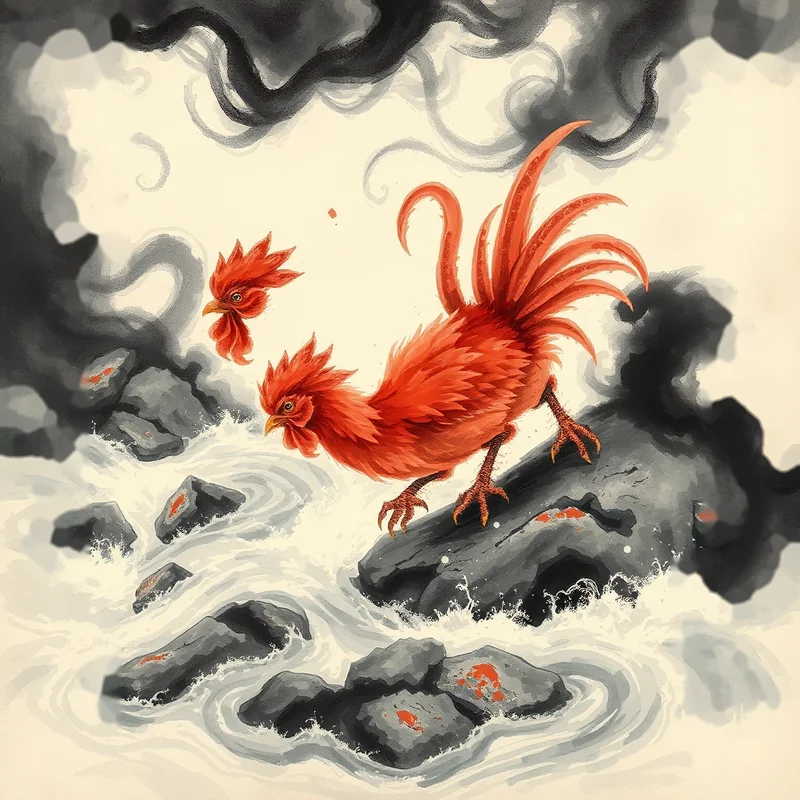
The Peng River below Mount Dai is full of shu fish — chicken-shaped, red-feathered, three tails, six feet, four heads, chattering like a magpie. Eat them and sorrow ends.
Original & Translations
北山经曰:又北三百里,曰带山,其上多玉,其下多青碧。彭水出焉,而西流注于芘湖之水,其中多儵鱼,其状如鸡而赤毛,三尾六足四首,其音如鹊,食之可以已忧。
这条记载里最不像话的是形状,最动人的是最后三个字。
先说形状:像鸡,红色的毛,三条尾巴,六只脚,四个头。一条鱼长成这样,已经不是"奇怪"能形容的了。
但"其状如鸡"这四个字,可能是全部线索。带山下有彭水,水边多水鸟。有一种鸟叫"水鸡"(秧鸡),红喙红脚,在水草间跑动,受惊时贴着水面飞。站在岸上远看,一群水鸡在浅水里扑腾,红色的羽毛、好几条腿、好几个头挤在一起——你很难说清那是一只还是几只。
"儵"这个字本身就有意思。它读 shū,意思是"快速、忽然"。《庄子》里有两个神人叫"儵"和"忽",代表时间的迅疾。给一条鱼起名叫"儵",说的是它动得快——快到你只能看见一团红影。
三尾六足四首,也可以这样理解:三条尾巴是水花,六只脚是一群鸟的腿,四个头是一群鸟的头。一个人的眼睛跟不上,就把一群记成了一只。
然后是"食之可以已忧"。
已忧,就是让忧愁停止。这四个字在山海经里只出现这一次。别的药效都是治病:治肿、治疥、治痈、治蛊、治聋。只有这一条,治的是情绪。
古人不是不懂情绪。他们只是很少把情绪写进药方。而在这里,一条红毛的、跑得飞快的、看起来像四只鸡挤在一起的鱼,被认定能治忧伤。
为什么是它?也许因为看着它就不难过——一群红鸟在水面上乱窜,扑腾、尖叫、互相挤,这画面本身就是滑稽的。也许因为吃了它的人确实心情好了:鱼肉富含某些成分,或者只是"吃了一顿好的"这件事本身让人宽慰。
《诗经》里说"焉得谖草,言树之背"——哪里找得到忘忧草,种在北堂之下。萱草(黄花菜)后来成了中国传统的"忘忧"象征。儵鱼是水里的忘忧草。
一条像鸡的鱼,红毛,三尾六足四首,叫声像喜鹊。吃了它,你就不难过了。这大概是山海经里最温柔的一条药方。
The Classic of Northern Mountains: three hundred li north is Mount Dai, jade above, green stone below. The Peng River rises there and flows west into Lake Bi. It teems with shu fish — shaped like chickens with red feathers, three tails, six feet, and four heads, chattering like magpies. Eat them, and sorrow ends.
The shape is the absurd part. The last three characters are the beautiful part.
The shape first: like a chicken, red feathers, three tails, six feet, four heads. Calling that a fish stretches the word past breaking.
But "shaped like a chicken" may be the whole clue. Below Mount Dai runs the Peng, and its banks are thick with water birds. There is a bird called the water chicken — rail, moorhen — red bill, red legs, running through the reeds, skimming the surface when startled. From the bank, a flock thrashing in the shallows reads as red feathers, too many legs, too many heads crowded together. Hard to say whether that is one animal or several.
The name is telling too. Shu means sudden, swift. In Zhuangzi, two deities named Shu and Hu personify the speed of time. Naming a fish "Swift" says it moves faster than the eye — a red blur.
Three tails could be splashes. Six feet, the legs of a flock. Four heads, their heads. An eye that cannot keep up records a flock as a single animal.
Then: eat it, and sorrow ends.
Yi you — to make grief stop. This phrase occurs exactly once in the entire book. Every other medical note treats the body: swelling, scabies, abscess, possession, deafness. This one treats a feeling.
The ancients were not ignorant of emotion. They simply rarely wrote it into a prescription. Here, a red-feathered, fast-running, four-chickens-in-a-trenchcoat fish is declared a cure for sadness.
Why this one? Perhaps because watching it is already a cure — a flock of red birds skittering and shrieking and shoving each other is comic. Perhaps because eating it genuinely helped: good protein, or simply a good meal.
The Book of Songs asks where to find the sorrow-forgetting plant, to set it by the north hall. Daylily became China's traditional emblem of forgetting care. The shu fish is the daylily of the water.
A chicken-shaped fish, red-feathered, three tails, six feet, four heads, calling like a magpie. Eat it, and you are no longer sad. It may be the gentlest prescription in the book.
แม่น้ำเผิงที่เขาต้ายมีปลาซู ตัวเหมือนไก่ ขนแดง สามหาง หกขา สี่หัว เสียงเหมือนนกกางเขน
"กินแล้วหายเศร้า" — ประโยคนี้ปรากฏครั้งเดียวในซานไห่จิง ยาอื่นรักษาร่างกาย ทั้งฝี โรคผิวหนัง หูหนวก มีเพียงตัวนี้ที่รักษาความรู้สึก
Sungai Peng di Gunung Dai banyak ikan Shu: macam ayam, bulu merah, tiga ekor, enam kaki, empat kepala, bunyinya macam murai.
"Makan, hilang duka." Ayat ini muncul sekali sahaja dalam seluruh kitab. Ubat lain untuk badan — bisul, kudis, pekak. Hanya yang ini untuk perasaan.
Sông Bành dưới núi Đái nhiều cá Thúc: hình gà, lông đỏ, ba đuôi, sáu chân, bốn đầu, kêu như bồ câu ác.
"Ăn vào hết buồn." Câu này chỉ xuất hiện một lần trong toàn bộ sách. Thuốc khác trị thân thể — mụn, ghẻ, điếc. Chỉ con này trị cảm xúc.
Sungai Peng di Gunung Dai banyak ikan Shu: mirip ayam, bulu merah, tiga ekor, enam kaki, empat kepala, suaranya seperti murai.
"Dimakan menghilangkan duka." Kalimat ini muncul sekali saja di seluruh kitab. Obat lain untuk tubuh — bisul, kudis, tuli. Hanya ini untuk perasaan.
Nearby Creatures