 计蒙
中山经
《中山经》
计蒙
Ji Meng
4.656k中山经
DeityRainDragon
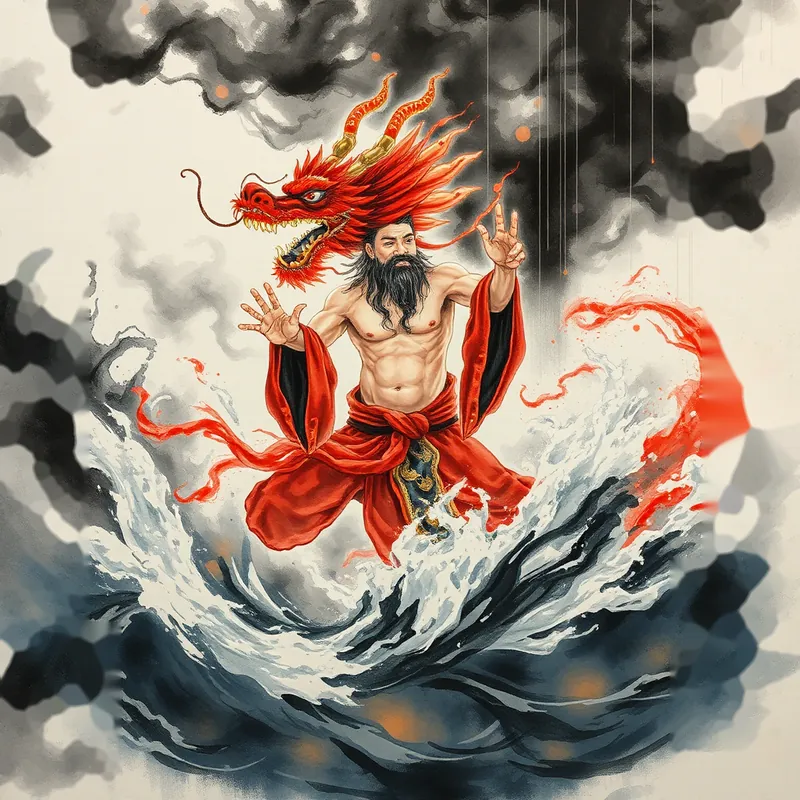
The god Ji Meng dwells on Mount Guang — human body, dragon head. He swims constantly in the depths of the Zhang River, and wherever he goes, wind and rain follow.
Original & Translations
中山经曰:又东一百五十里,曰光山,其上多碧,其下多木。神计蒙处之,其状人身而龙首,恒游于漳渊,出入必有飘风暴雨。
光山是中山经里很普通的一座山:上面多碧玉,下面多树。没什么特别的。但计蒙住在这里。
人身,龙首。他常在漳渊里游——漳水是华北的一条大河,今天的漳河,河北与河南的界河。渊是深水处。
"出入必有飘风暴雨"——他进出水面的时候,一定带起狂风暴雨。
这是山海经里对"雨神"最直白的一次描述。不需要祭祀,不需要祈祷,他只要动一下,天就变。
在中国神话里,管雨的神换过很多代。最早是应龙——黄帝的部下,能蓄水,涿鹿之战里放水淹蚩尤。后来是龙王,四海龙王,每一个都有自己的辖区。再后来是雷公电母风伯雨师,一套班子。
计蒙属于最早的这一层:一个具体的人形神,住在一个具体的水潭里,掌管一片具体的天气。
"恒游于漳渊"这句话值得注意。他不是站在云上,他是在水里游。中国的雨神大多跟水有关,但像计蒙这样"常住在河底"的,不多。他更像一个水中的居民,而不是天上的官员。
后来漳水流域确实有龙王庙,有祈雨的传统。计蒙的形象可能就是那套信仰的雏形:人们相信,河底住着一个能决定下不下雨的东西。
汉代的画像石上,人身龙首的形象很常见——伏羲女娲是人身蛇尾,许多神祇是人身兽首。这种"半人半兽"的造型,在汉代是神性的标志,不是怪异。
一个人身龙首的神,常年在河底游动,出来一次就带一场暴雨。他不需要被崇拜,他只需要被躲避——看见天要变了,别站在河边。
The Classic of Central Mountains: a hundred and fifty li east is Mount Guang, green jade above, timber below. Nothing special. But Ji Meng lives there.
Human body, dragon head. He swims constantly in the Zhang's deep pools — the Zhang being a major north China river, today the boundary between Hebei and Henan. Yuan means deep water.
"When he comes out or goes in, there is always a gale and violent rain."
This is the most direct description of a rain god in the entire book. No sacrifice required, no prayer. He moves, and the weather changes.
China's rain deities changed dynasties many times. Earliest was Yinglong, a servant of the Yellow Emperor who could store water and flooded Chiyou's army at Zhuolu. Later came the Dragon Kings, four seas, four jurisdictions. Later still, a full bureaucracy: Thunder Duke, Lightning Mother, Wind Earl, Rain Master.
Ji Meng belongs to the oldest layer: a specific human-shaped god, in a specific pool, controlling a specific piece of weather.
Note "swims constantly in the Zhang's pools." He is not standing on a cloud. He swims. Most Chinese rain deities are connected to water, but few live at the bottom of a river. He is less a celestial official than an aquatic resident.
The Zhang valley did develop dragon-kings and rain-prayer traditions. Ji Meng may be the prototype of that belief: something at the bottom of the river decides whether it rains.
On Han stone reliefs, human body with an animal head is everywhere — Fuxi and Nüwa with serpent tails, dozens of gods with beast heads. In Han iconography, half-human is a marker of divinity, not of monstrosity.
A god with a dragon's head, swimming year-round at the bottom of a river, surfacing once and bringing a storm. He does not need worship. He needs to be avoided. When the sky starts to turn, get away from the bank.
เขากวงมีเทพจี้เหมิงสถิต ร่างคนหัวมังกร อาศัยอยู่ในวังน้ำลึกของแม่น้ำจาง
"ออกหรือเข้า ต้องมีลมแรงและฝนตกหนัก" — เทพฝนที่ตรงที่สุดในซานไห่จิง ไม่ต้องบวงสรวง แค่ขยับตัว อากาศก็เปลี่ยน
เขาอยู่ใต้น้ำ ไม่ได้ยืนบนเมฆ เหมือนชาวน้ำ ไม่เหมือนข้าราชการสวรรค์
Gunung Guang didiami dewa Ji Meng — badan manusia, kepala naga. Dia berenang di pusaran Sungai Zhang.
"Keluar atau masuk, mesti ada angin kencang dan hujan lebat." Dewa hujan paling langsung dalam kitab. Tak perlu sembahyang; dia bergerak, cuaca berubah.
Dia tinggal di dasar sungai, bukan di atas awan. Macam penduduk air, bukan pegawai langit.
Núi Quang có thần Kế Mông ngự — mình người, đầu rồng. Thường bơi ở vực sâu sông Chương.
"Ra vào ắt có cuồng phong bạo vũ." Thần mưa trực diện nhất trong sách. Không cần cúng tế; ngài động, thời tiết đổi.
Ngài sống dưới đáy sông, không đứng trên mây. Như cư dân nước, không như quan trên trời.
Gunung Guang didiami dewa Ji Meng — badan manusia, kepala naga. Ia berenang di pusaran Sungai Zhang.
"Keluar atau masuk, pasti ada angin kencang dan hujan lebat." Dewa hujan paling langsung di kitab. Tak perlu sesajen; ia bergerak, cuaca berubah.
Ia tinggal di dasar sungai, bukan di atas awan. Seperti penduduk air, bukan pejabat langit.
Nearby Creatures