 猼訑
南山经
《南山经》
猼訑
Boyi
4.431k南山经
BeastSheepProtection
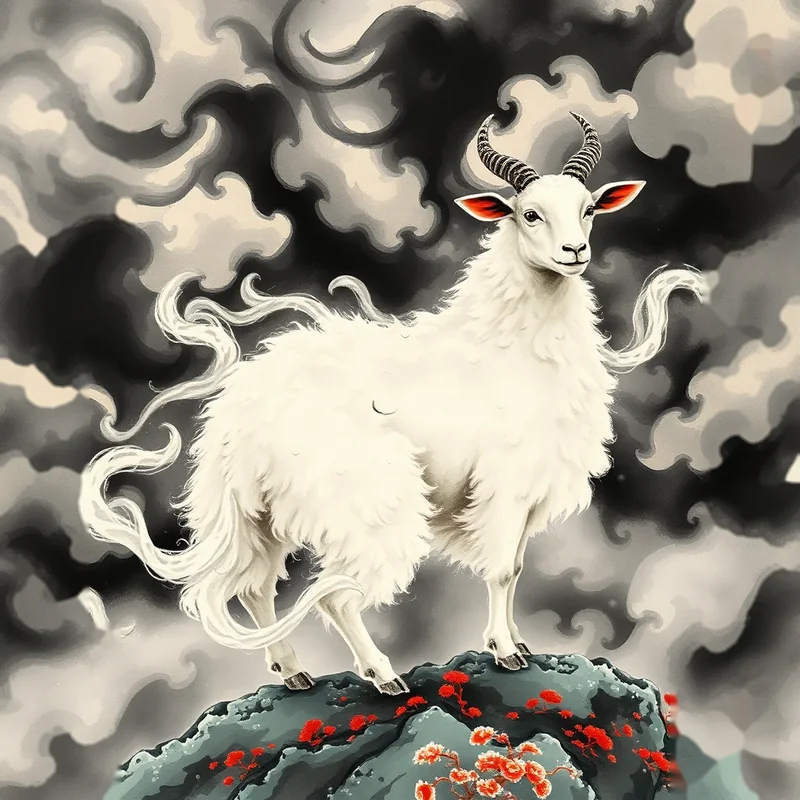
On Mount Ji lives a sheep with nine tails and four ears — and its eyes are on its back. Wear a piece of it and you will not be afraid.
Original & Translations
南山经曰:又东三百里,曰基山,其阳多玉,其阴多怪木。有兽焉,其状如羊,九尾四耳,其目在背,其名曰猼訑,佩之不畏。
基山是南山首经的第三座山,南面出玉,北面长满奇形怪状的树。猼訑就住在这里:羊的身子,九条尾巴,四只耳朵,眼睛长在背上。
先说最扎眼的那点——眼睛在背。这不是随手一写。自然界里确实有"背上有眼"的东西:天蚕蛾的翅膀、孔雀的尾羽、某些鱼的背鳍,都长着眼状斑纹。捕食者扑过来时突然展开,对方一愣,它就跑了。古人看见这种动物,很自然地记成"其目在背"。
四只耳朵也是同类观察。兔子的耳后有腺体,某些羚羊的耳部结构复杂,远看像两对耳朵。九条尾巴最费解,但尾巴分叉、尾毛蓬松的羊并非没有。
真正重要的是最后三个字:佩之不畏。带着它的皮毛,就不再害怕。
这句话暴露了山海经的底层逻辑:它不只是一本怪物名录,更是一本用法手册。什么能吃、吃了治什么病、什么能佩戴、佩了防什么——几乎每条都带一句实用说明。猼訑的功能是"不畏",也就是辟邪壮胆。
有意思的是,古人对恐惧这件事看得很实在。他们不认为恐惧是心理问题,而认为是有东西在作祟——那就找一样更厉害的东西带在身上压住它。猼訑就是那件东西。
至于"猼訑"这两个字,本身就透着古怪。它们在别的先秦典籍里几乎不出现,历代抄本还写出过"猼𫍙""博施"等不同写法。有学者认为它可能根本不是汉语词,而是某个方国语言的音译——山海经里这类"读不出来"的名字不少,它们是更古老的口传记忆留下的化石。
一只羊,九条尾巴,四只耳朵,眼睛长在背上。带上它,你就不怕了。
The Classic of Southern Mountains: three hundred li further east is Mount Ji. Jade on its sunny side, strange twisted trees on its shaded side. A beast lives there — shaped like a sheep, nine tails, four ears, and its eyes are on its back. Its name is Boyi. Wear it, and you will not fear.
Mount Ji is the third peak of the southern range. Boyi is a sheep with nine tails, four ears, and eyes set into its back.
Start with the eyes. This is not random. Nature really does produce "eyes on the back": the wing-spots of silk moths, the tail feathers of peacocks, the dorsal markings of certain fish. Flash them at a predator and it hesitates for half a second — enough to escape. Someone saw an animal like that and wrote down, plainly, "its eyes are on its back."
The four ears are the same kind of observation. Rabbits have paired glands behind their ears; some antelope have ear structures complex enough to read as two pairs. Nine tails is harder, but forked tails and heavy winter coats exist.
Then the three characters that matter: wear it, and you will not fear.
That line gives away the real logic of the Shan Hai Jing. It is not a catalogue of monsters. It is a manual. What can be eaten, what it cures, what can be worn, what wearing it protects you from — almost every entry ends with a practical note. Boyi's function is courage. Carry a piece of it and fear loses its grip.
The ancients treated fear as a substance rather than a mood. Something is out there doing this to you; find something stronger and keep it on your body. Boyi was that something.
Even the name is odd. The two characters appear almost nowhere else in pre-Qin literature, and surviving copies render them three or four different ways. Some scholars suspect it isn't Chinese at all but a transcription of a regional language — one of many unreadable names in the text that survive as fossils of older oral memory.
A sheep. Nine tails. Four ears. Eyes on its back. Wear it, and you are not afraid.
เขาจีมีสัตว์ตัวหนึ่ง รูปร่างเหมือนแกะ แต่มีเก้าหาง สี่หู และตาอยู่บนหลัง ชื่อโปยี่
"พกไว้แล้วไม่กลัว" — นี่คือจุดสำคัญของมัน มันไม่ใช่แค่สัตว์ประหลาด แต่เป็นเครื่องราง มีไว้ใส่ติดตัวเพื่อปัดเป่าความกลัว
คนโบราณมองความกลัวว่าเป็นสิ่งของ ไม่ใช่อารมณ์ ถ้ามีอะไรมาทำให้กลัว ก็หาอะไรที่แรงกว่าใส่ตัวไว้
Gunung Ji ada binatang macam kambing biri-biri, sembilan ekor, empat telinga, mata di belakang. Namanya Boyi.
"Bawa dia, takkan takut." Ini kunci dia — bukan sekadar binatang aneh, tapi azimat. Orang dulu anggap takut itu benda, bukan perasaan. Cari yang lebih kuat, bawa dekat badan.
Núi Cơ có thú hình dê, chín đuôi, bốn tai, mắt trên lưng. Tên Bá Di.
"Mang theo thì không sợ" — đó là mấu chốt. Nó không chỉ là quái thú, mà là bùa hộ mệnh. Người xưa coi nỗi sợ là vật chất, không phải cảm xúc.
Gunung Ji ada binatang macam domba, sembilan ekor, empat telinga, mata di punggung. Namanya Boyi.
"Bawa dia, tak akan takut." Itu intinya — bukan cuma hewan aneh, tapi jimat. Orang dulu anggap takut itu benda, bukan perasaan.
Nearby Creatures