 鯥
南山经
《南山经》
鯥
Lu
4.119k南山经
Divine FishRebirthMedicine
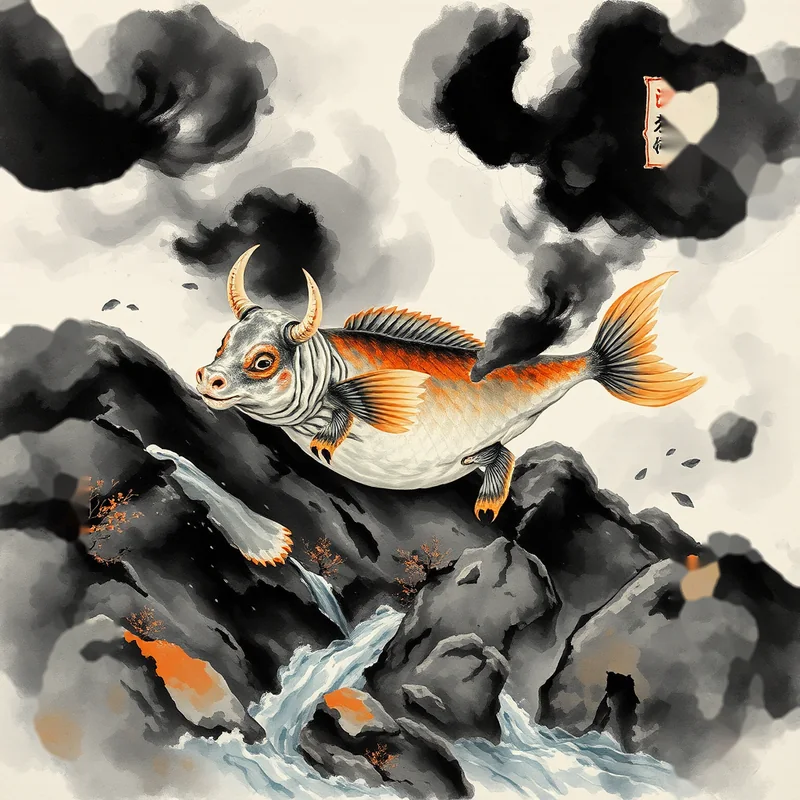
In the waters of Mount Di lives a fish shaped like an ox that lives on dry hillsides, has a snake's tail and wings tucked under its flanks. It dies in winter and is reborn in summer. Eat it and you will not swell.
Original & Translations
南山经曰:又东三百里,曰柢山,多水,无草木。有鱼焉,其状如牛,陵居,蛇尾有翼,其羽在魼下,其音如留牛,其名曰鯥,冬死而夏生,食之无肿疾。
先注意两个字:陵居。陵是山坡、高地。一条鱼,住在山坡上。
山海经里的"鱼"从来不是分类学概念。它更像"水里的东西"这个笼统说法——只要常在水边出现,就可能被叫作鱼。鯥有牛的身形、蛇的尾巴、藏在胁下的翅膀,叫声还像牛。它到底是鱼、是兽、是两栖,原文并不打算说清。
"冬死而夏生"是最耐人寻味的一句。郭璞注得很直接:这不是真死,是蛰伏,"无所知如死耳"——没知觉了,跟死了一样。也就是说,鯥会冬眠。会冬眠的动物,在古人眼里就是"死过一次又活过来"。
这一句让鯥带上了一层象征:它是循环的。死不是终点,是季节的一部分。
最后是药效:食之无肿疾。肿,在古代医学里是个大词——水肿、痈肿、肿瘤,都算。一条会冬眠的鱼,吃了能消肿。这里面可能有一层朴素的联想:冬天"消下去"、夏天"长起来"的东西,大概也能让身上的肿块消下去。这种"以象治病"的思路,在《本草纲目》里到处都是。
还有一个细节容易被忽略:柢山"多水,无草木"。一座水多却没有草没有树的山,是荒的。鯥就住在这样的地方。它不需要草木,它有自己的循环——冬天消失,夏天回来。
一条住在山坡上、冬死夏生的牛形鱼。山海经里最不像鱼的东西,偏偏被归在鱼里。
The Classic of Southern Mountains: three hundred li east is Mount Di — much water, no grass, no trees. A fish lives there, shaped like an ox, dwelling on the slopes. Snake tail, wings, feathers tucked beneath its flanks. Its call is like a lowing ox. Its name is Lu. It dies in winter and lives again in summer. Eat it, and you will not swell.
Notice two characters first: ling ju — it dwells on a ridge. A fish. Living on a hillside.
"Fish" in the Shan Hai Jing was never a taxonomic category. It is closer to "thing found near water." Anything that showed up around rivers and lakes could get called a fish. Lu has an ox's body, a snake's tail, wings hidden under its ribs, and a voice like cattle. Whether it is fish, beast, or amphibian is a question the text declines to answer.
"Dies in winter, lives in summer" is the line worth staying with. Guo Pu's commentary is blunt: it does not truly die, it estivates — "without awareness, as if dead." Lu hibernates. And to ancient observers, an animal that disappears and comes back has died once and returned.
That single line gives Lu a symbolic weight: it is cyclical. Death is not an ending, it is a season.
Then the medicine: eat it, and you will not swell. Swelling was a large category in early Chinese medicine — edema, abscess, tumor, all of it. A fish that shrinks away in winter and swells back in summer is, by the logic of resemblance, a cure for swelling. This "treat by image" reasoning runs all through the later materia medica.
One detail is easy to skip: Mount Di has much water and no plants. A mountain like that is barren. Lu lives there anyway. It does not need grass or trees. It has its own cycle — gone in winter, back in summer.
An ox-shaped fish that lives on a hillside and dies every winter. The least fish-like thing in the book, filed under fish.
เขาตี่มีน้ำมาก แต่ไม่มีต้นไม้และหญ้า มีปลาตัวหนึ่ง รูปร่างเหมือนวัว อาศัยอยู่บนเนินดิน มีหางงู ปีกซ่อนใต้สีข้าง เสียงร้องเหมือนวัว ชื่อลู่
"หน้าหนาวตาย หน้าร้อนเกิดใหม่" — จริง ๆ คือจำศีล แต่คนโบราณเห็นว่ามันตายแล้วกลับมา จึงเป็นสัญลักษณ์ของการหมุนเวียน เกิด-ตาย-เกิด
Gunung Di banyak air, tiada pokok. Ada ikan macam lembu, duduk di lereng. Ekor ular, sayap bawah rusuk, bunyi macam lembu. Namanya Lu.
"Mati musim sejuk, hidup musim panas" — sebenarnya hibernasi. Orang dulu nampak dia mati lalu kembali. Simbol kitaran.
Núi Để nhiều nước, không cây cỏ. Có cá hình trâu, sống trên gò. Đuôi rắn, cánh dưới sườn, tiếng như trâu. Tên Lục.
"Đông chết hạ sinh" — thực ra là ngủ đông. Người xưa thấy nó chết rồi sống lại. Biểu tượng tuần hoàn.
Gunung Di banyak air, tanpa pohon. Ada ikan mirip lembu, tinggal di lereng. Ekor ular, sayap di bawah rusuk, suara seperti lembu. Namanya Lu.
"Mati musim dingin, hidup musim panas" — sebenarnya hibernasi. Orang dulu lihat ia mati lalu kembali. Simbol siklus.
Nearby Creatures