 灌灌
南山经
《南山经》
灌灌
Guanguan
4.328k南山经
Divine BirdClarity
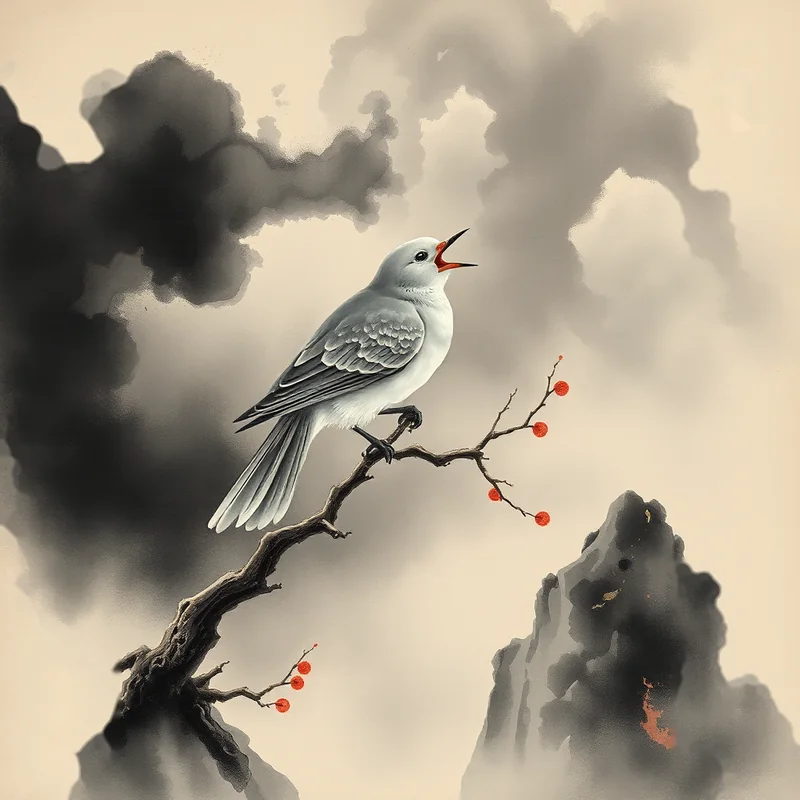
On Mount Qingqiu lives a dove-like bird whose call sounds like a shout of rebuke. Wear it and you will never be confused.
Original & Translations
南山经曰:又东三百里,曰青丘之山。其阳多玉,其阴多青雘。有兽焉,其状如狐而九尾……有鸟焉,其状如鸠,其音若呵,名曰灌灌,佩之不惑。
同一段话里,先写九尾狐,再写灌灌。这个顺序不是随手排的。
九尾狐"能食人",灌灌"佩之不惑"。一个是危险的诱惑,一个是清醒的解药。青丘山被写成了一个有进有出的地方:你会在这里遇到让人迷失的东西,也会在这里找到解药。
灌灌长得像鸠——就是斑鸠、鸽子那一类。不起眼。它的特别之处在声音:其音若呵。"呵"是大声斥责,是有人在你背后突然吼一嗓子。一只鸽子大小的鸟,叫起来像人在骂人。
"佩之不惑"三个字值得细看。不惑,不是"不迷惑"这么简单。在先秦语境里,"惑"指的是判断力被扰乱——分不清真假、辨不明方向、被表象牵着走。孔子说"四十而不惑",说的也是这个。灌灌的功能,是让人保持清醒。
古人很清楚:世界是会骗人的。山里有瘴气,林中有幻影,路上有花言巧语的人,梦里还有别的东西。所以他们需要一件"反迷惑"的东西随身带着。
值得注意的是,灌灌和九尾狐都住在青丘。后世把青丘写成了狐族的故乡、妖气的源头,但山海经的原文里,青丘同时出产让人迷失的东西和破解迷失的东西。这才是它真正有意思的地方——它不是纯粹的险地,而是一个你必须带着判断力才能通过的地方。
那只叫声像呵斥的鸟,也许就是提醒你别走神的那个声音。
The Classic of Southern Mountains: three hundred li east is Mount Qingqiu. Jade on its sunny side, blue ochre on its shaded side. A beast lives there, shaped like a fox with nine tails... And a bird lives there too, shaped like a dove, whose call sounds like a shout of rebuke. Its name is Guanguan. Wear it, and you will not be confused.
In the same passage, the nine-tailed fox comes first, then Guanguan. That order is not accidental.
The fox "eats people." Guanguan, worn, keeps you from being confused. One is a dangerous seduction; the other is the antidote. Mount Qingqiu is written as a place with both an entrance and an exit: here you meet what makes you lose your way, and here you also find what restores it.
Guanguan looks like a dove — an ordinary pigeon-shaped bird. What sets it apart is the voice: its call sounds like he. He is the sound of being loudly scolded, someone barking at you from behind. A pigeon-sized bird that shouts like an angry person.
The three characters "wear it, and you will not be confused" deserve a closer look. Huo in pre-Qin usage is not simple puzzlement. It means judgment thrown off balance — unable to tell true from false, unable to hold a direction, dragged along by appearances. Confucius' "at forty, I was no longer confused" uses the same word. Guanguan's function is clarity.
The ancients knew the world lies. Miasma in the mountains, phantoms in the woods, sweet talk on the road, and stranger things in dreams. So they wanted something anti-confusion to carry.
Note that Guanguan and the nine-tailed fox share a mountain. Later tradition turned Qingqiu into the homeland of fox spirits, a source of enchantment. But the original text has Qingqiu producing both the thing that misleads you and the thing that cures it. That is the genuinely interesting part: it is not simply a dangerous place. It is a place you can only cross if you keep your judgment.
That bird whose call sounds like a rebuke may be the voice telling you to pay attention.
เขาชิงชิวมีนกคล้ายนกเขา เสียงร้องเหมือนคนตะโกนดุ ชื่อกวนกวน "พกไว้แล้วไม่หลง"
ในย่อหน้าเดียวกัน เกจิ้งจอกเก้าหางมาก่อน แล้วกวนกวนตามมา หนึ่งคือสิ่งล่อลวงที่อันตราย อีกหนึ่งคือยาแก้ ทำให้เขาชิงชิวเป็นทั้งทางเข้าและทางออก
Gunung Qingqiu ada burung macam merpati, bunyinya macam orang membentak. Namanya Guanguan. "Bawa dia, takkan keliru."
Dalam petikan sama, musang sembilan ekor dulu, Guanguan kemudian. Satu godaan berbahaya, satu penawar. Qingqiu ada jalan masuk dan jalan keluar.
Núi Thanh Khâu có chim giống cu gáy, tiếng như người quát. Tên Quán Quán. "Mang theo thì không mê hoặc."
Cùng đoạn, cáo chín đuôi trước, Quán Quán sau. Một là cám dỗ nguy hiểm, một là thuốc giải. Thanh Khâu có lối vào và lối ra.
Gunung Qingqiu ada burung mirip merpati, suaranya seperti orang membentak. Namanya Guanguan. "Bawa dia, tak akan tersesat."
Di petikan sama, rubah sembilan ekor dulu, Guanguan kemudian. Satu godaan berbahaya, satu penawar. Qingqiu punya jalan masuk dan jalan keluar.
Nearby Creatures