 鸓
西山经
《西山经》
鸓
Lei
4.121k西山经
Divine BirdFire
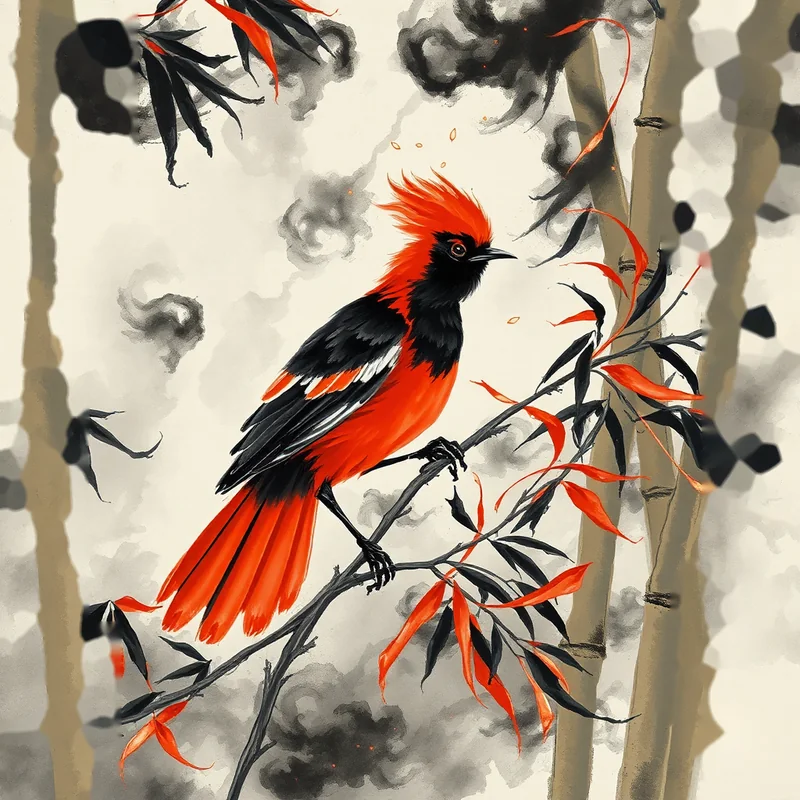
Mount Cui is full of lei birds — magpie-shaped, red and black, with two heads and four feet. They ward off fire.
Original & Translations
西山经曰:又西二百里,曰翠山,其上多棕枏,其下多竹箭,其阳多黄金,其阴多牦牛、麢、麝。其鸟多鸓,其状如鹊,赤黑而两首四足,可以御火。
翠山是西山经里少有的富山:山上棕树楠木,山下竹丛,南面出黄金,北面有牦牛、羚羊、麝。有树有水有矿有兽,是个过日子的地方。
鸓就住在这里。像喜鹊,红黑相间,两个头,四只脚。功能是"御火"——防火。
两首四足,鸟的身体配上四只脚,这在生物学上说不通。但"两个头"在自然界有对应:连体双生。蛇有双头,龟有双头,鸟也有过双头标本。古人偶尔见到一只双头鸟,记下来,就成了异兽。
四足更可能是观察误差。鸟的翅膀收起来时,翼尖的羽毛拖在身后,远看像多了一对腿;或者它站立时翅膀半张,撑在地上。这类误记在山海经里很常见。
真正有意思的是"可以御火"。
中国古代建筑是木结构,火灾是常态。一场火烧掉整条街、整座宫城,史书里比比皆是。所以古人对防火这件事极度上心:屋顶装鸱吻(据说能吞火),门上画水兽,屋里摆水缸,连瓦当上都刻着"汉并天下"。
在这种背景下,"能防火的鸟"是一种非常实际的需求。翠山多竹木,正是最容易起火的地方。鸓住在竹林里,红色的羽毛像火,黑色的像烧焦的痕迹——它本身就是火的形象,却号称能防火。
这是一种典型的巫术思维:用火的样子去克火。红黑相间、两头四足,看起来越像火里的东西,就越能压住火。
翠山出黄金,也出竹木。金子不怕火,竹子最怕火。一只红黑色的双头鸟站在竹林里,说它能防火——这大概是山里人最想要的一句承诺。
The Classic of Western Mountains: two hundred li west is Mount Cui. Palms and nanmu on top, bamboo groves below. Gold on its sunny side; yak, antelope, and musk deer on its shaded side. The mountain is full of lei birds — magpie-shaped, red and black, two heads and four feet. They ward off fire.
Mount Cui is one of the few genuinely rich mountains in the western range: timber above, bamboo below, gold on one slope, grazing animals on the other. Trees, water, ore, game. A place you could live.
The lei lives there. Like a magpie, red and black, two heads, four feet. Its function is yu huo — to ward off fire.
Two heads and four feet on a bird does not work biologically. But two heads does occur: conjoined twins. Snakes, turtles, and occasionally birds are born that way. Someone saw a two-headed bird, wrote it down, and it entered the bestiary.
Four feet is more likely observation error. A bird's folded wings trail their primaries behind like an extra pair of legs; or it stands with wings half-open, tips touching the ground. Mistakes like that are everywhere in this text.
What matters is "wards off fire."
Chinese buildings were timber, and fire was routine. A single blaze could take a street, a palace complex. The histories are full of them. So fire prevention was an obsession: ridge ornaments that supposedly swallow flame, water beasts painted on doors, vats kept in courtyards.
Against that background, "a bird that prevents fire" is not a fantasy. It is a practical demand. Mount Cui is dense with bamboo and timber — exactly the kind of place that burns. And the lei's plumage is red and black: red like flame, black like char. It looks like fire and claims to stop it.
This is standard sympathetic magic: fight fire with the image of fire. The more it resembles something born in a blaze, the more power it has over one.
Cui yields gold and bamboo. Gold survives fire; bamboo does not. A red-black two-headed bird standing in a bamboo grove, said to prevent fire — probably the most useful promise anyone in those hills could ask for.
เขาฉุยอุดมไปด้วยไม้ไผ่ ทองคำ และสัตว์ป่า มีนกเหลยมาก รูปร่างเหมือนนกกางเขน สีแดงดำ สองหัวสี่ขา "กันไฟได้"
บ้านเมืองจีนโบราณสร้างด้วยไม้ ไฟไหม้เป็นเรื่องปกติ นกที่กันไฟได้จึงไม่ใช่เรื่องเพ้อฝัน แต่เป็นความต้องการจริง ๆ
Gunung Cui kaya buluh, emas dan binatang. Banyak burung Lei — macam murai, merah hitam, dua kepala empat kaki. "Boleh halau api."
Rumah lama Cina diperbuat daripada kayu; kebakaran biasa. Burung penangkal api bukan fantasi, tapi keperluan sebenar.
Núi Thúy nhiều tre, vàng và thú rừng. Có nhiều chim Lôi — hình bồ câu ác, đỏ đen, hai đầu bốn chân. "Trừ được lửa."
Nhà cổ Trung Hoa làm bằng gỗ; hỏa hoạn thường xuyên. Chim trừ lửa không phải ảo tưởng mà là nhu cầu thật.
Gunung Cui kaya bambu, emas, dan satwa. Banyak burung Lei — mirip murai, merah hitam, dua kepala empat kaki. "Bisa menangkal api."
Rumah kuno Tiongkok dari kayu; kebakaran biasa. Burung penangkal api bukan fantasi, tapi kebutuhan nyata.
Nearby Creatures