 讙
西山经
《西山经》
讙
Huan
4.436k西山经
BeastMimicryHealing
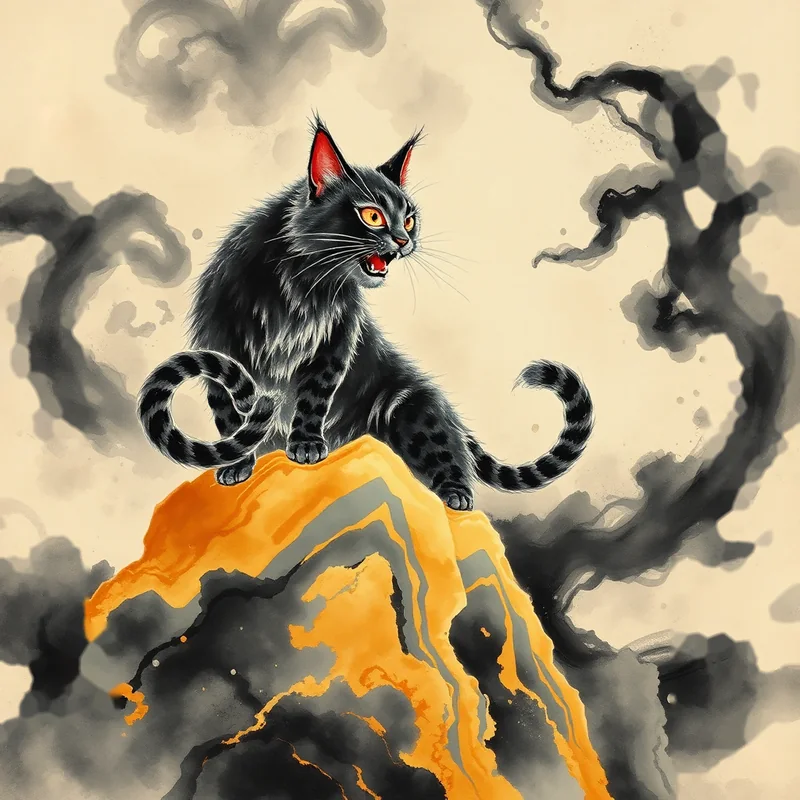
On Mount Yiwang lives a beast like a wildcat, one-eyed with three tails. Its name is Huan. It can mimic a hundred sounds at once, wards off evil, and eating it cures jaundice.
Original & Translations
西山经曰:西水行百里,至于翼望之山,无草木,多金玉。有兽焉,其状如狸,一目而三尾,名曰讙,其音如夺百声,是可以御凶,服之已瘅。
讙的样子像狸——野猫。一只眼,三条尾巴。但真正让人记住它的,是那句"其音如夺百声"。
"夺"在这里是"强取、掠取"的意思。郭璞注得很清楚:"言其能作百种物声也"——它能模仿一百种东西的叫声。不是叫得好听,是能学谁像谁。
这是山海经里少见的"声音怪物"。别的兽靠形貌吓人,讙靠的是把声音借过来用。
现实里确实有这样的动物。琴鸟能模仿电锯、相机快门、二十多种鸟叫;椋鸟能学人说话和汽车警报;鹦鹉更不用说。古人听到林子深处传出不属于那里的声音,很自然会想:有个东西在学。
而"夺"这个字用得狠。它不是"学",是"抢"。声音本来是别的动物的,讙把它抢过来,变成自己的。这个动词让模仿带上了一点侵略性。
所以它"可以御凶"。能模仿百声的东西,大概也能用声音把凶物吓走——你听见四面八方都是敌人,就不敢靠近了。
"服之已瘅",瘅是黄疸。吃了它能治肝病。这一条和声音没什么逻辑关系,是山海经的常态:药效往往来自附会,而不是来自形象。
翼望山还有一只鵸鵌,三头六尾,善笑,也能御凶。一座无草无木、只产金玉的山上,住着两个靠"声音"和"笑"来驱邪的东西。这大概不是巧合——荒山没有别的东西,只剩下声音。
The Classic of Western Mountains: a hundred li west by water is Mount Yiwang — no grass, no trees, much gold and jade. A beast lives there, shaped like a wildcat, one eye, three tails. Its name is Huan. Its voice is like seizing a hundred sounds. It wards off evil, and eaten it cures jaundice.
Huan looks like a li — a wildcat. One eye, three tails. But what you remember is the phrase: its voice is like seizing a hundred sounds.
Duo here means to grab, to take by force. Guo Pu's commentary is explicit: it can produce the calls of a hundred different creatures. Not that it sings beautifully — that it can imitate anything and sound exactly like it.
This is one of the rare "sound monsters" in the book. Other beasts frighten you with their bodies. Huan borrows voices.
Such animals exist. Lyrebirds imitate chainsaws, camera shutters, two dozen bird calls. Starlings mimic speech and car alarms. Parrots, obviously. Someone hearing a sound in the forest that does not belong there would reasonably conclude: something is copying.
And duo is a violent word for it. Not "learn" — "seize." The sound belonged to another animal. Huan takes it and makes it his own. That verb gives the mimicry an edge of aggression.
Which is why it wards off evil. A thing that can throw a hundred voices probably can also scare off something dangerous — you hear enemies on every side and you do not come closer.
"Eaten, it cures dan" — jaundice. Eating it treats liver disease. There is no logic connecting that to sound. That is normal for this book: medical effects come from association, not from anatomy.
Mount Yiwang also has the Qitu, a bird with three heads and six tails that laughs and also wards off evil. On a bare mountain with nothing but gold and jade, two creatures that drive away harm using voice and laughter. Probably not a coincidence. A barren mountain has nothing left but sound.
เขาอี้หวังมีสัตว์รูปร่างเหมือนแมวป่า ตาเดียว สามหาง ชื่อฮวน "เสียงร้องเหมือนฉกฉวยเสียงร้อยเสียง"
มันเลียนเสียงได้ทุกอย่าง เหมือนนกไลร์เบิร์ดหรือนกแก้วในโลกจริง คำว่า "ฉกฉวย" ทำให้การเลียนแบบดูรุกราน ไม่ใช่แค่เรียน
Gunung Yiwang ada binatang macam kucing hutan, satu mata, tiga ekor. Namanya Huan. "Bunyinya macam merampas seratus bunyi."
Ia tiru semua bunyi, macam burung lyrebird atau kakak tua. Perkataan "rampas" buat tiruan itu nampak ganas, bukan sekadar belajar.
Núi Dực Vọng có thú hình mèo rừng, một mắt, ba đuôi. Tên Hoan. "Tiếng như cướp trăm giọng."
Nó bắt chước mọi thứ, như chim lyre hay vẹt. Chữ "cướp" khiến việc bắt chước mang vẻ xâm lấn, không chỉ học.
Gunung Yiwang ada binatang mirip kucing hutan, satu mata, tiga ekor. Namanya Huan. "Suaranya seperti merampas seratus bunyi."
Ia meniru semua suara, seperti burung lyrebird atau beo. Kata "rampas" membuat tiruan itu terasa agresif, bukan sekadar belajar.
Nearby Creatures