 天马
北山经
《北山经》
天马
Heavenly Horse
4.439k北山经
BeastFlight
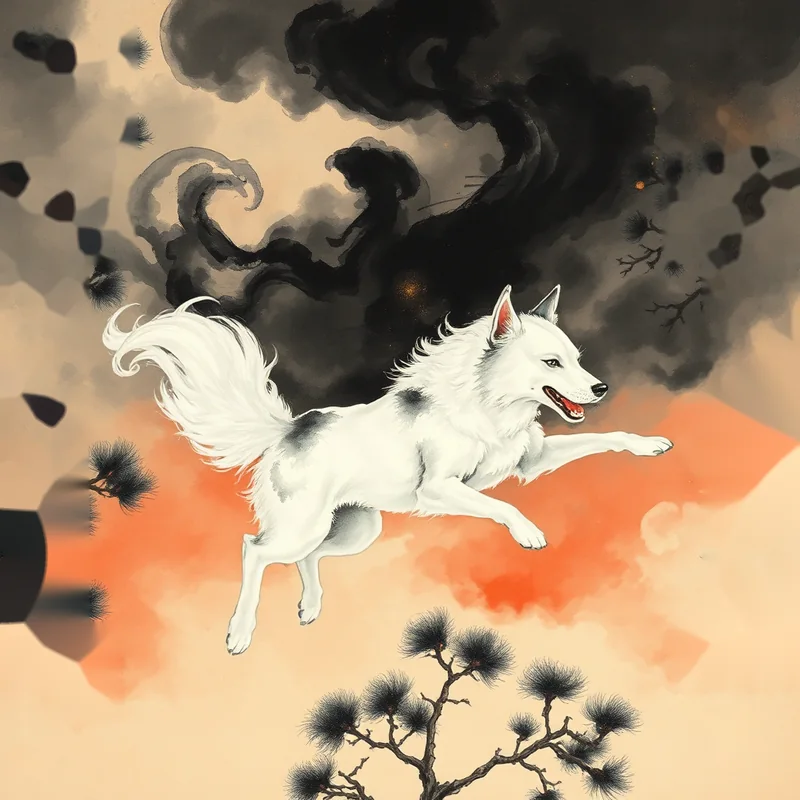
On Mount Macheng lives a beast shaped like a white dog with a black head. It takes flight the moment it sees you. Its name is Heavenly Horse, and it calls out its own name.
Original & Translations
北山经曰:又东北二百里,曰马成之山,其上多文石,其阴多金玉。有兽焉,其状如白犬而黑头,见人则飞,其名曰天马,其鸣自訆。
先看名字:天马。你脑子里立刻出现的是一匹神骏的白马,鬃毛飞扬,四蹄踏云。
再看长相:像白狗,黑脑袋。
这个落差是故意的,还是后人想多了?
"天马"这个词,在汉代有非常具体的所指:西域来的良马,汗血宝马,汉武帝为它写过《天马歌》,还派李广利远征大宛去抢。在汉代人的语汇里,"天马"=顶级战马。
但这条记载在北山经,成书远早于汉武帝。也就是说,在"天马"被用来指西域骏马之前,它已经是一只白狗了。后来那个更响亮的含义盖住了原本的意思。
它为什么叫天马?因为它会飞。"见人则飞"——看见人就飞走。这里的"飞"是飞走,还是飞起来?
中文的"飞"两种情况都能用。如果只是"逃走",那它是一只胆小的白狗,见人就跑,跑得极快,快到像飞。如果是真的飞,那它是一只滑翔的兽。
第二种解释有现实基础。中国北方有鼯鼠,前后肢之间有皮膜,能从高处滑翔几十米。夜里看,一只白腹黑头的鼯鼠张开皮膜从树上滑下,确实像在飞。而鼯鼠的体型、毛色,跟小狗差不多。
还有一句常被忽略:其鸣自訆。它叫起来像在喊自己的名字——"天马、天马"。这是山海经的固定句式,很多兽都这样。但放在这里特别有意思:一只白狗黑头的东西,边飞边喊"天马",像是自己在给自己正名。
马成山多文石,北面出金玉。一座产美石和金属的山,住着一只会飞的白狗,自称天马。
这大概是山海经里最好笑的一条:名字最威风,长相最普通。
The Classic of Northern Mountains: two hundred li northeast is Mount Macheng, banded stone above, gold and jade below. A beast lives there, shaped like a white dog with a black head. It flies the moment it sees a person. Its name is Tianma — Heavenly Horse — and it calls out its own name.
Start with the name. Heavenly Horse. The image arrives immediately: a proud white stallion, mane streaming, hooves on cloud.
Now the body: a white dog with a black head.
Is the gap intentional, or are we overreading?
In the Han dynasty, tianma had a precise referent: the fine horses of the Western Regions, the "blood-sweating" steeds. Emperor Wu wrote a "Song of the Heavenly Horse" and sent an army to Dayuan to seize them. In Han vocabulary, tianma meant the best warhorse in the world.
But this entry is in the Northern Classic, composed long before Emperor Wu. Which means that before "tianma" ever meant a Ferghana stallion, it meant a white dog. The grander meaning later buried the original.
So why the name? Because it flies. Jian ren ze fei — sees a person, and flies. Is that "flies away" or "takes flight"?
Chinese fei covers both. If it just means escape, this is a timid white dog that bolts, fast enough to look like flight. If it means actual flight, it is a gliding animal.
The second reading has a real basis. Northern China has flying squirrels: a membrane between fore and hind limbs, good for gliding tens of meters. At dusk, a white-bellied, black-headed squirrel launching from a branch genuinely looks like flight. And in size and fur, it is about dog-like.
One line usually skipped: it calls out its own name. Qi ming zi jiao — it cries "tianma, tianma." This is a stock formula in the book, but here it is comic: a white dog with a black head, gliding between trees, shouting "Heavenly Horse" as if correcting the record.
Mount Macheng produces patterned stone, gold, and jade. A mountain of fine rock and metal, inhabited by a flying white dog that insists it is a horse.
Probably the funniest entry in the book: the most magnificent name attached to the most ordinary animal.
เขาหม่าฉางมีสัตว์รูปร่างเหมือนหมาขาว หัวดำ เห็นคนก็บิน ชื่อ "เทียนหม่า" (ม้าสวรรค์) และร้องเรียกชื่อตัวเอง
ชื่อฟังดูสง่างาม แต่ตัวจริงคือหมาขาวหัวดำ ในสมัยฮั่น "เทียนหม่า" หมายถึงม้าพันธุ์ดีจากตะวันตก แต่ก่อนหน้านั้นมันคือหมาตัวนี้
Gunung Macheng ada binatang macam anjing putih, kepala hitam. Nampak orang terus terbang. Namanya "Tianma" — Kuda Syurga — dan dia sebut namanya sendiri.
Nama hebat, rupa biasa: anjing putih kepala hitam. Zaman Han, "tianma" bermaksud kuda terbaik dari Barat. Sebelum itu, ia anjing ini.
Núi Mã Thành có thú hình chó trắng, đầu đen. Thấy người là bay. Tên "Thiên Mã" — ngựa trời — và nó kêu đúng tên mình.
Tên oai, hình thường: chó trắng đầu đen. Thời Hán, "thiên mã" chỉ ngựa quý Tây Vực. Trước đó, nó là con chó này.
Gunung Macheng ada binatang mirip anjing putih, kepala hitam. Lihat orang langsung terbang. Namanya "Tianma" — Kuda Langit — dan ia menyebut namanya sendiri.
Nama megah, rupa biasa: anjing putih kepala hitam. Zaman Han, "tianma" berarti kuda terbaik dari Barat. Sebelum itu, ia anjing ini.
Nearby Creatures