 蠪蛭
东山经
《东山经》
蠪蛭
Longzhi
4.547k东山经
BeastMan-eaterNine
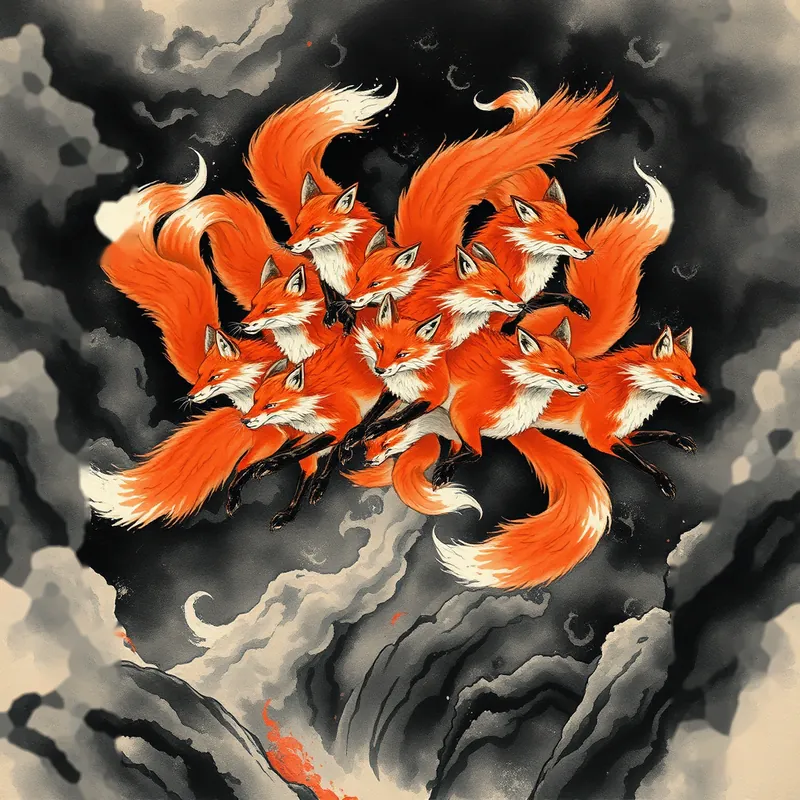
On Mount Fuli lives a beast shaped like a fox with nine tails, nine heads, and tiger claws. Its name is Longzhi. It cries like a baby, and it eats people.
Original & Translations
东山经曰:又南三百里,曰凫丽之山,其上多金玉,其下多箴石。有兽焉,其状如狐,而九尾、九首、虎爪,名曰蠪蛭,其音如婴儿,是食人。
九尾,九首,虎爪。狐狸的身子,九个脑袋,九条尾巴,脚是老虎的脚。
先把它和另一个条目放在一起看。同样是东山经,空桑之山有一只"蠃蠪":状如狐而九首九尾。名字差一个字,描述几乎一样,只是一个多写了"虎爪",一个没有。
这几乎可以确定是同一个传说的两个版本。山海经是汇编出来的,不同来源的记载被并排放在一起,编者没有做统一——于是同一只兽,在两座山上各出现了一次,名字还写岔了。
这种情况在书里很多。它提醒我们:山海经不是一个人写的,也不是一次写成的。它是一层一层叠上去的。
再说"九"。
九在中文里不是精确数字,是"极多"。九尾狐、九头鸟、九尾九首、九歌、九鼎、九泉——九是上限,是满。
一只狐狸长九个脑袋,意味着什么?意味着你砍掉一个,还有八个。这不是"多",这是"杀不死"。虎爪是武器,九尾是多余的、装饰性的、炫耀性的力量。
而它的叫声像婴儿。
这一条我们已经见过很多次了:九尾狐、合窳、蠪蛭,全都"其音如婴儿"。这不是巧合,这是一个固定的恐怖配方:用最无害的声音,召唤最危险的东西。婴儿的哭声会让人放下戒备、走过去、弯下腰。
这是山海经里最冷酷的一类想象:它知道人的软肋在哪里。
凫丽山出金玉,也出箴石(一种可以做针的石头)。一座能出产珍宝和工具的山,住着一只九个头的、用婴儿声音捕猎的狐狸。
它不缺什么。它只是想吃人。
The Classic of Eastern Mountains: three hundred li south is Mount Fuli, gold and jade above, needle-stone below. A beast lives there — shaped like a fox, with nine tails, nine heads, and tiger claws. Its name is Longzhi. It cries like a baby, and it eats people.
Nine tails, nine heads, tiger claws. A fox's body, nine skulls, nine tails, and a tiger's feet.
Put it beside another entry first. Also in the Eastern Classic, Mount Kongsang has a creature called Luolong: shaped like a fox with nine heads and nine tails. One character apart in the name, nearly identical description — except one adds tiger claws and the other does not.
This is almost certainly one legend in two versions. The Shan Hai Jing is a compilation; records from different sources were set side by side and never harmonized. So the same beast appears on two mountains, under two slightly different names.
This happens throughout the book. It is a reminder: no single author, no single moment. The text accumulated in layers.
Now the nine.
Nine in Chinese is not a precise number. It is "as many as there can be." Nine-tailed fox, nine-headed bird, nine tails and nine heads, the Nine Songs, the Nine Tripods, the Nine Springs. Nine is the ceiling. Nine is full.
What does a fox with nine heads mean? It means you cut one off and eight remain. Not "many." Unkillable. The tiger claws are weapons. The nine tails are surplus — decorative, boastful power.
And its cry is a baby's.
We have seen this repeatedly: the nine-tailed fox, He Yu, Longzhi. All cry like infants. Not coincidence — a fixed horror formula. Use the most harmless sound to summon the most dangerous thing. A baby's cry makes people lower their guard, walk over, bend down.
It is the coldest kind of imagination in the book: it knows exactly where people are soft.
Mount Fuli yields gold, jade, and needle-stone — rock you can grind into needles. A mountain that produces both treasure and tools, inhabited by a nine-headed fox that hunts with a baby's voice.
It lacks nothing. It simply wants to eat.
เขาฝูหลี่มีสัตว์รูปร่างเหมือนจิ้งจอก เก้าหาง เก้าหัว กรงเล็บเสือ ชื่อหลงจือ เสียงร้องเหมือนทารก กินคน
ในเล่มเดียวกัน เขาค่งซังมี "หลัวหลง" รูปร่างเหมือนกัน เก้าหัวเก้าหาง ต่างกันแค่ชื่อและกรงเล็บ — น่าจะเป็นตำนานเดียวกันสองฉบับ
"เก้า" ในภาษาจีนหมายถึง "มากที่สุด" เก้าหัว = ตัดหัวหนึ่งยังเหลือแปด = ฆ่าไม่ตาย
Gunung Fuli ada binatang macam musang, sembilan ekor, sembilan kepala, cakar harimau. Namanya Longzhi. Bunyinya macam bayi. Makan orang.
Dalam kitab sama, Gunung Kongsang ada "Luolong": sama rupa, sembilan kepala sembilan ekor. Bezanya nama dan cakar — mungkin satu legenda dua versi.
"Nine" dalam Cina bermaksud "paling banyak". Sembilan kepala = potong satu, tinggal lapan = tak boleh dibunuh.
Núi Phù Lệ có thú hình cáo, chín đuôi, chín đầu, vuốt hổ. Tên Long Chí. Tiếng như trẻ sơ sinh. Ăn thịt người.
Trong sách, núi Không Tang có "Loa Long": hình giống hệt, chín đầu chín đuôi. Khác tên và vuốt — có lẽ một truyền thuyết hai bản.
"Chín" trong tiếng Hán nghĩa là "nhiều nhất". Chín đầu = chặt một còn tám = không giết được.
Gunung Fuli ada binatang mirip rubah, sembilan ekor, sembilan kepala, cakar harimau. Namanya Longzhi. Suaranya seperti bayi. Makan orang.
Di kitab sama, Gunung Kongsang ada "Luolong": rupa sama, sembilan kepala sembilan ekor. Bedanya nama dan cakar — mungkin satu legenda dua versi.
"Nine" dalam bahasa Cina berarti "paling banyak". Sembilan kepala = potong satu, tinggal delapan = tak bisa dibunuh.
Nearby Creatures