 孰湖
西山经
《西山经·西次三经》
孰湖
Shuhu
4.438k西山经
BeastFlightCuriosity
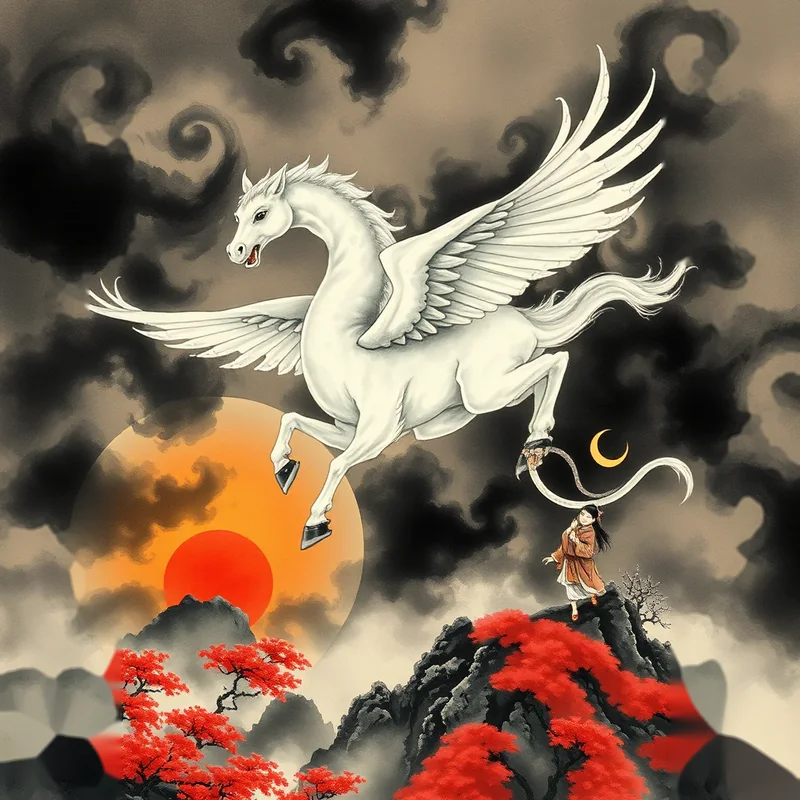
On Mount Yanzi — the mountain where the sun goes down — lives a beast with a horse body, bird wings, a human face and a snake tail. It likes to lift people up. Its name is Shuhu.
Original & Translations
西山经曰:崦嵫之山,其上多丹木,员叶而赤茎,黄华而赤实,其味如饴,食之不饥。丹水出焉,西流注于稷泽。有兽焉,其状马身而鸟翼,人面蛇尾,是好举人,名曰孰湖。
崦嵫山是太阳落下去的地方。《离骚》里屈原说"吾令羲和弭节兮,望崦嵫而勿迫"——他求驾日车的神慢一点,别那么快把太阳拉进这座山。所以这座山在古人心里的位置很明确:世界的西端,光的终点。
就在这座山上,住着一只马身、鸟翼、人面、蛇尾的兽。
它的爱好是"好举人"。
举,是抱起来、托起来。整部《山海经》里,写"食人"的兽一大把,写"举人"的只有孰湖一个。它不吃你,也不吓你,它把你抱起来。
抱到哪儿去?书里没说。飞起来?放到山顶?还是像抱孩子那样抱一会儿?三个字的留白,两千年没人填上。
这个细节让孰湖成了全书最温柔的一只兽。它长着最拼凑的身体——马的身子、鸟的翅膀、人的脸、蛇的尾巴,四样东西硬装在一起,怎么看都像个失败的实验品。但它做的事,是把你抱起来。
在一个连太阳都会死掉的地方,有一只兽愿意把路过的人举起来。这句话本身就够了。
The Classic of Western Mountains: Mount Yanzi — red trees on its slopes, round leaves and crimson stems, yellow blossoms and red fruit, sweet as syrup, eat it and you will not hunger. The Dan River rises there and flows west into the Ji Marsh. A beast lives on the mountain: horse's body, bird's wings, human face, snake's tail. It likes to lift people up. Its name is Shuhu.
Mount Yanzi is where the sun goes down. In the Li Sao, Qu Yuan begs Xihe, the charioteer of the sun: slacken the reins, do not hurry the sun into that mountain. So the mountain had one clear meaning for the ancients: the western edge of the world, the end of light.
And on that mountain lives a creature with a horse's body, bird's wings, a human face, a snake's tail.
Its hobby is lifting people up.
"Ju" means to lift, to hold up in your arms. The Shan Hai Jing is crowded with beasts that eat people. Shuhu is the only one that picks them up. It doesn't eat you. It doesn't frighten you. It lifts you.
Lifts you where? The book doesn't say. Into the air? Onto the summit? Held for a moment the way you'd hold a child? Three characters of silence, and nobody has filled them in for two thousand years.
That detail makes Shuhu the gentlest creature in the whole catalogue. Its body is a patchwork — horse, bird, human, snake, four incompatible parts bolted together, looking like a failed experiment. And what it does with that body is pick you up.
In a place where even the sun comes to die, one beast is willing to lift a passerby off the ground. That sentence is enough.
西山经: เขางันจือ ที่ที่ดวงอาทิตย์ตก มีสัตว์ร่างกายม้า ปีกนก หน้ามนุษย์ หางงู ชื่อซูหู
มันชอบ "อุ้มคน"
ในตำรานี้มีสัตว์กินคนเต็มไปหมด แต่มีเพียงตัวเดียวที่อุ้มคนขึ้นมา ไม่กิน ไม่ขู่ แค่อุ้ม
อุ้มไปไหน หนังสือไม่บอก สามตัวอักษรที่เว้นว่างไว้ สองพันปีไม่มีใครเติม
ร่างกายมันต่อจากสี่อย่างที่ไม่เข้ากัน แต่สิ่งที่มันทำ คือประคองคนขึ้นจากพื้น
Klasik Gunung Barat: Gunung Yanzi, tempat matahari terbenam, didiami binatang bertubuh kuda, bersayap burung, berwajah manusia, berekor ular. Namanya Shuhu.
Kegemarannya "mengangkat orang".
Kitab ini penuh binatang pemakan manusia. Hanya Shuhu yang mengangkat mereka. Tidak memakan, tidak menakut-nakuti — mengangkat.
Diangkat ke mana? Buku tidak berkata. Tiga aksara kosong, dua ribu tahun tiada yang mengisi.
Tubuhnya cantuman empat bahagian yang tidak sepadan. Tetapi yang dilakukannya: mengangkat orang dari tanah.
Kinh Sơn Tây: núi Yêm Tư, nơi mặt trời lặn, có loài thú mình ngựa, cánh chim, mặt người, đuôi rắn. Tên Thục Hồ.
Nó thích "nâng người lên".
Sách này đầy thú ăn thịt người. Chỉ Thục Hồ nâng họ lên. Không ăn, không dọa — chỉ nâng.
Nâng đi đâu? Sách không nói. Ba chữ bỏ trống, hai ngàn năm không ai điền.
Thân thể nó ghép từ bốn thứ không hợp nhau. Nhưng việc nó làm: nhấc một người lên khỏi mặt đất.
Klasik Gunung Barat: Gunung Yanzi, tempat matahari terbenam, dihuni binatang bertubuh kuda, bersayap burung, berwajah manusia, berekor ular. Namanya Shuhu.
Kegemarannya "mengangkat orang".
Kitab ini penuh pemakan manusia. Hanya Shuhu yang mengangkat mereka. Tidak memakan, tidak menakut-nakuti — mengangkat.
Diangkat ke mana? Buku tidak berkata. Tiga aksara kosong, dua ribu tahun tak terisi.
Tubuhnya gabungan empat hal yang tak sepadan. Tapi yang dilakukannya: mengangkat orang dari tanah.
Nearby Creatures